Best-In-Class Printer Warranty: 3 years or 100K prints! LEARN MORE

Help Shape What Comes Next

Try New Features & Give Us Feedback

The Sawgrass Print Utility Public Beta is now available to every user. Turn it on inside Sawgrass Print Utility and try new features while they are still being built.

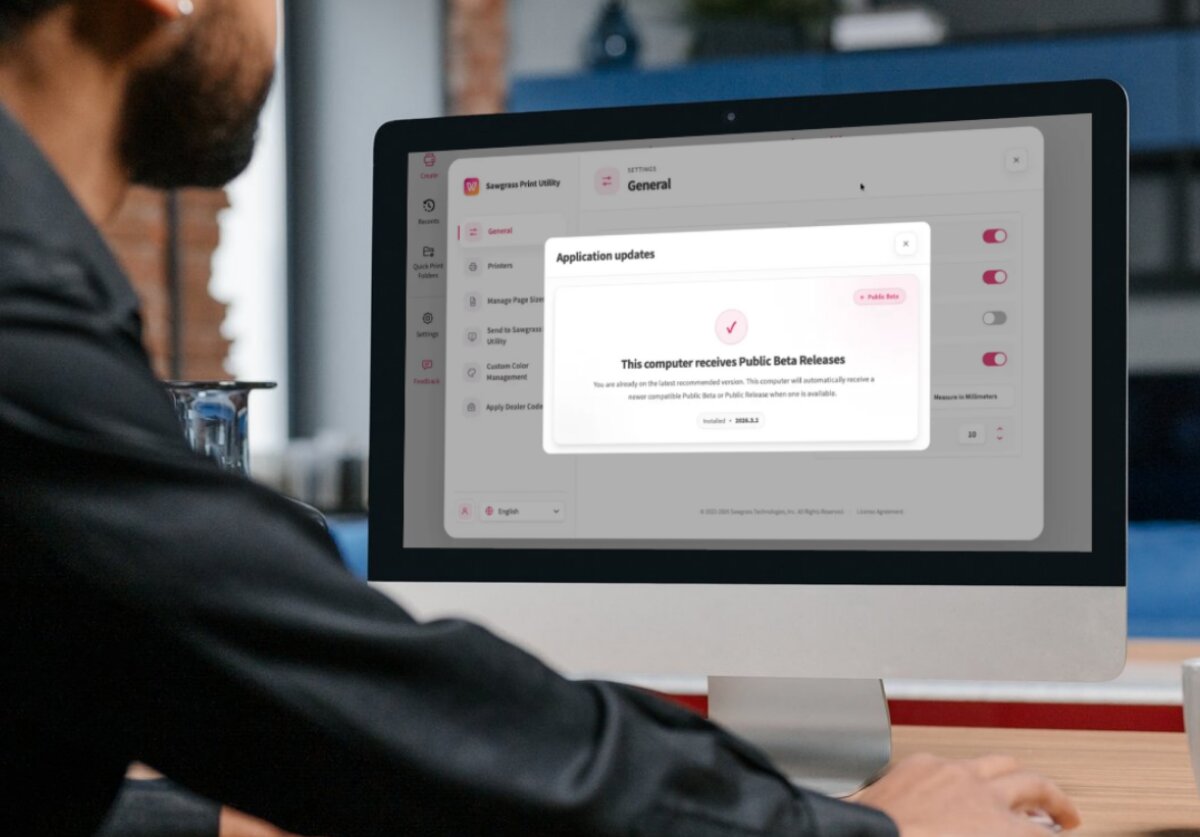
Sawgrass Print Utility Public Beta on a desktop computer

What Is A Public Beta Release?

A pre-release version of software that is still in development and made available to the general public for testing and feedback before it is officially launched.

The Sawgrass Print Utility Public Beta gives you early access to in-progress features.

Better Tools for Everyone

Your feedback helps us improve the software.

Real-World Feedback

You show us what helps and what slows you down.

Your Workflow Is Unique

Different products and shops have different needs.

What You Are Testing?

You will see new features and improvements while they are still in development. Some things may change as we learn from your feedback.

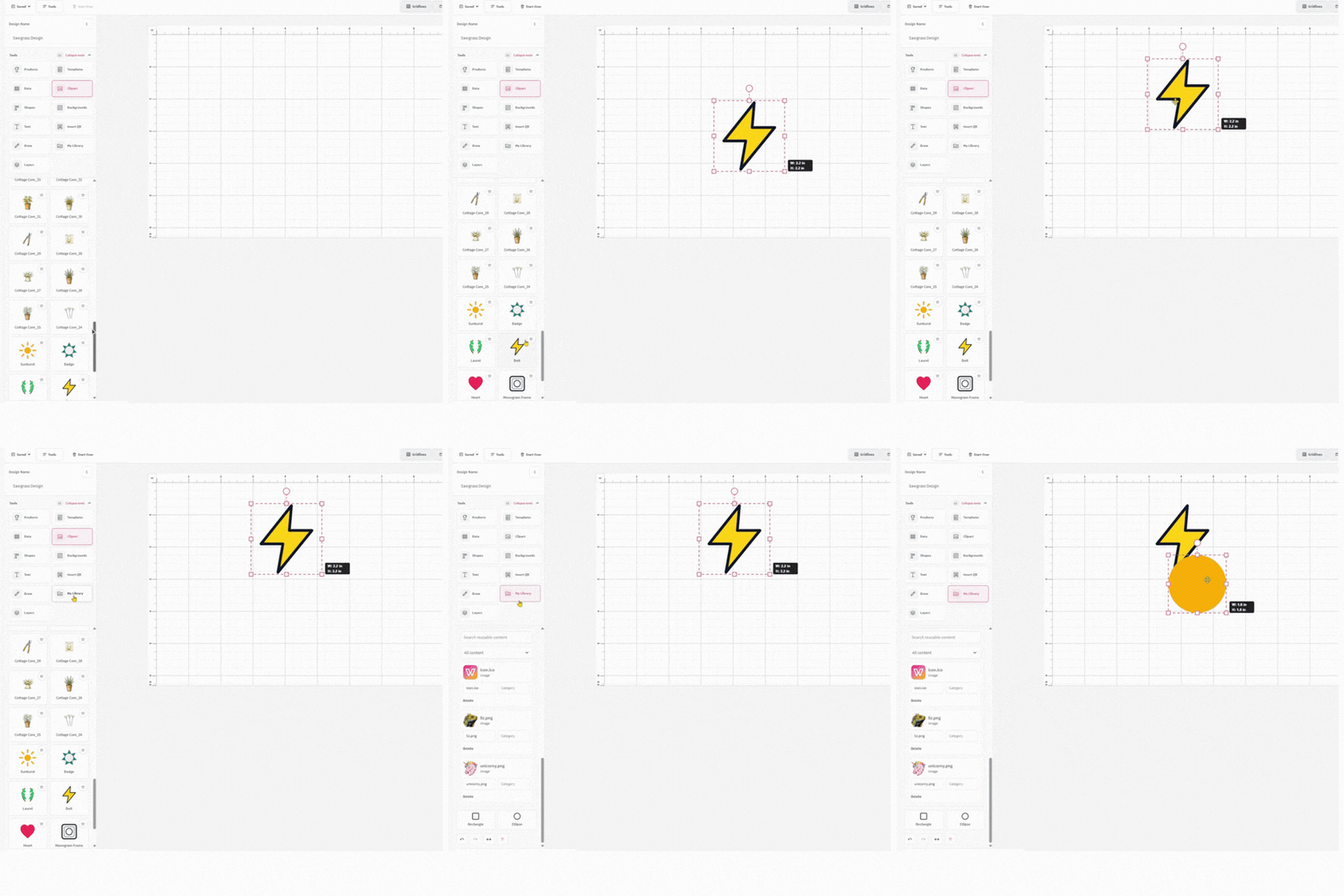
New features being tested in Sawgrass Print Utility
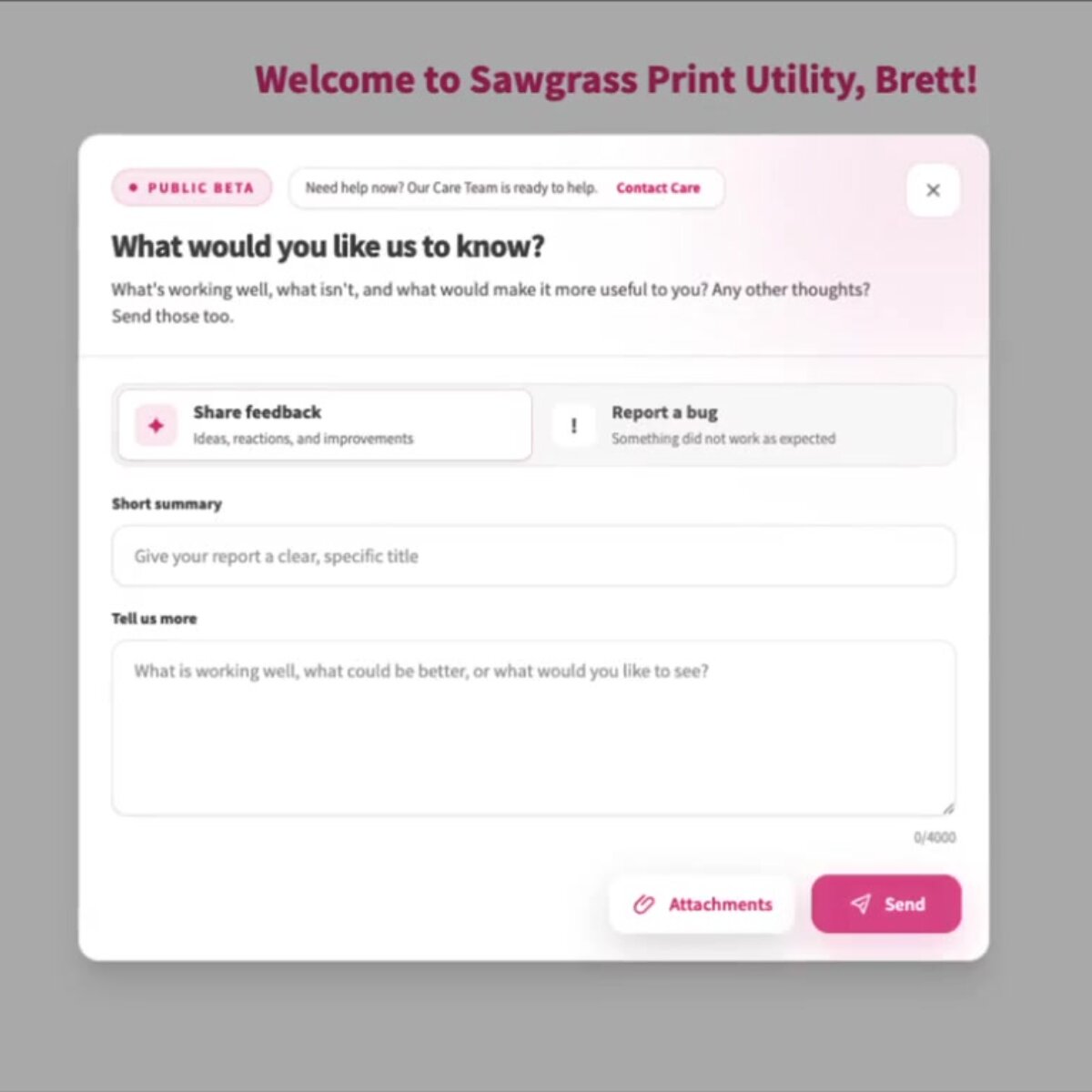
The feedback form inside Sawgrass Print Utility

Tell Us How It’s Going

You can share feedback right inside the Sawgrass Print Utility. Tell us what works well, what can be better and what you would like to see next.

How To Turn On The Sawgrass Print Utility Public Beta

1

Navigate To General Settings

Make sure you are on the most recent version of Sawgrass Print Utility. You can check this in the General Settings on the Desktop App.

2

Select Public Beta

Navigate to Public Beta. Once located, select Public Beta which will enable a pop-up.

3

Toggle To Turn It On

A pop-up will ask if you would like to enable the Public Beta.

4

Agree To The Terms

The Terms & Conditions will ask if you would like to receive Public Beta Releases.

5

Select Join Public Beta

Once enabled, you’re ready to explore the new features currently in development!

Real Work. Real Feedback.
Better Printing Tools.

Turn on the new public beta and tell us what you think!

Tips For Pressing VersiFlex Light Media

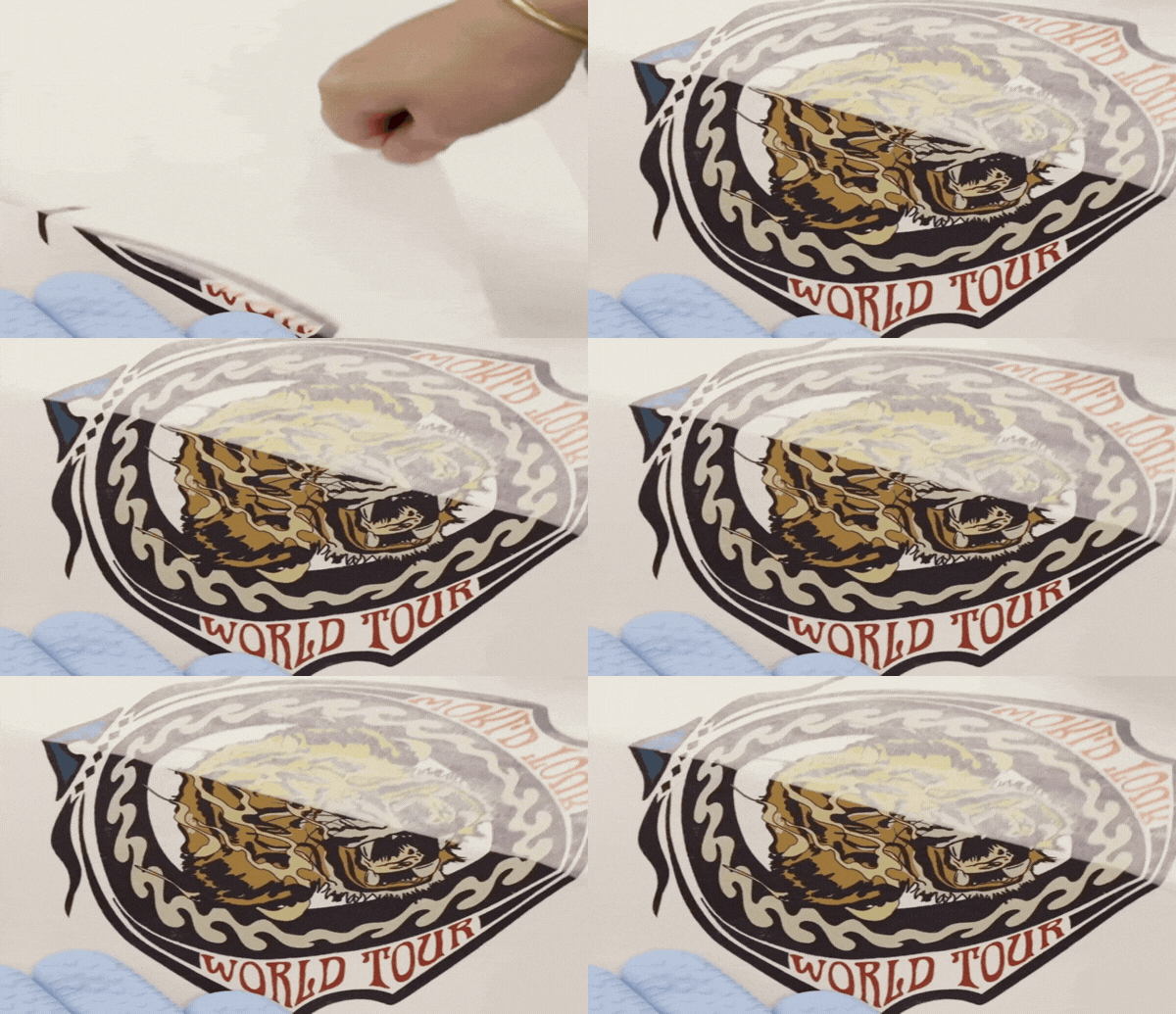
Peeling VersiFlex Light transfer paper from a printed garment

Every VersiFlex demo ends the same way. Somebody watches the design come off the paper, says that looks easy, and then hesitates when it is their turn to reach into the press.

The hot peel is the one part of the VersiFlex process that people get quiet about. Printing is familiar. Pressing is a button and a timer. Then the press opens, there is a sheet of paper sitting on a garment that was at temperature four seconds ago, and the instruction is to pick it up right now.

It is a reasonable thing to pause at. It is also, in practice, the least eventful part of the whole workflow once you have done it twice.

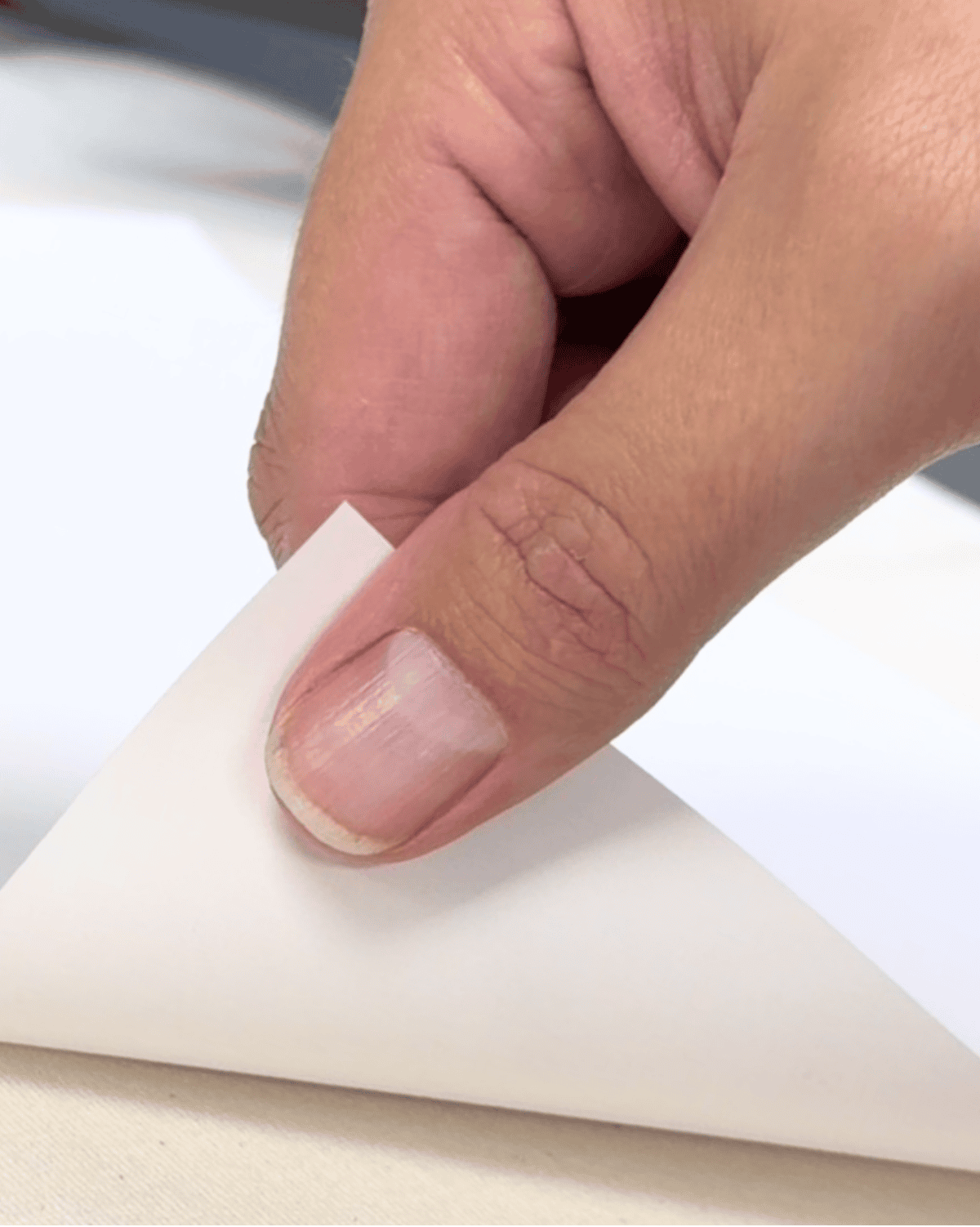
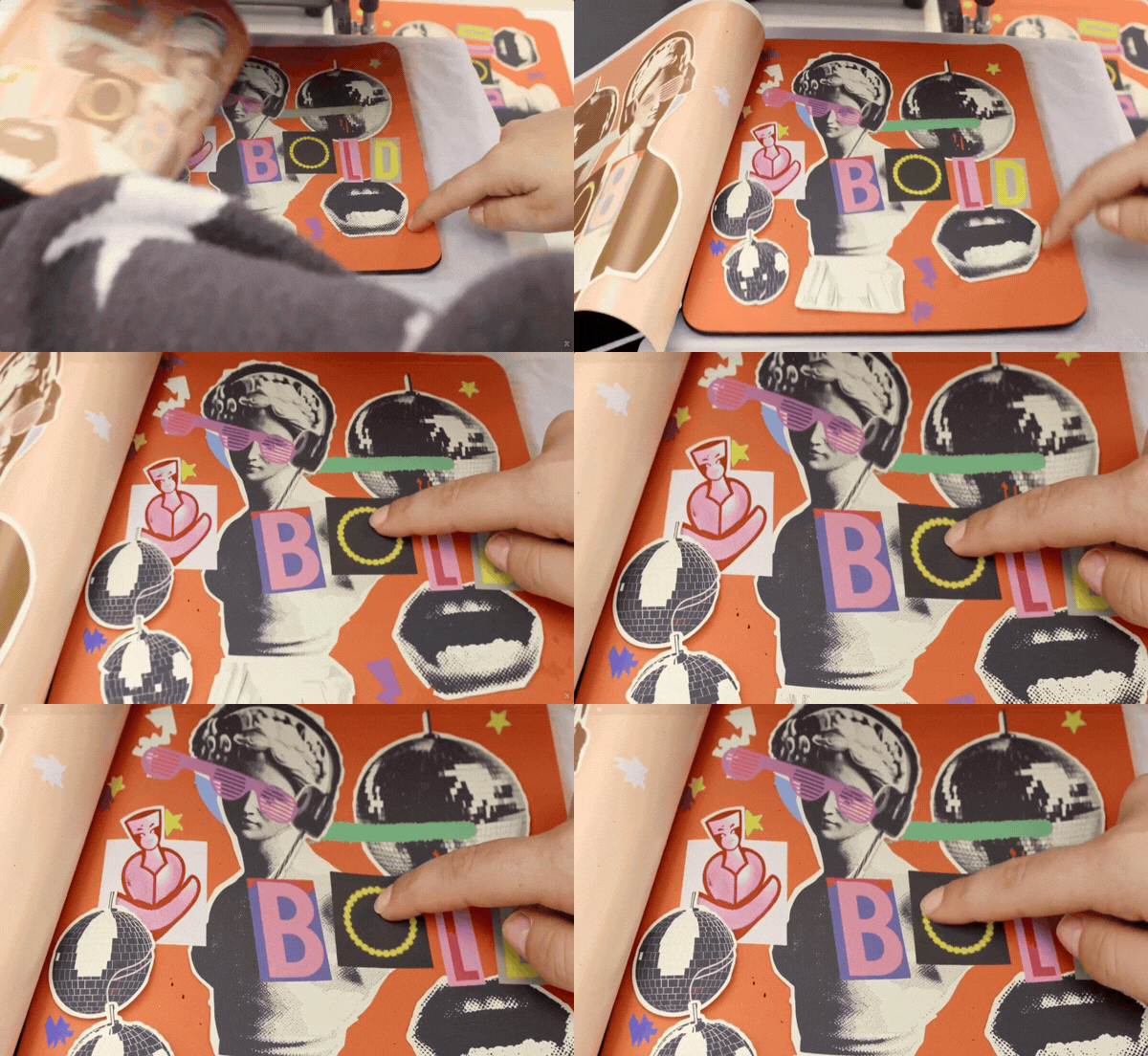
Fingers lifting a corner of transfer paper

What You Are Actually Touching

The heat platen has swung away from the garment and it is not where your hands are going.

What you are reaching for is a sheet of transfer paper lying on fabric.

Paper is thin and it sheds heat fast. You are gripping a corner between two fingers for about a second, and then the paper is moving away from the heat with your hand.

Why Timing Matters

VersiFlex is a hot peel, and that is not a preference. The paper is designed to release while the transfer is still hot. Let it sit and cool on the garment and the release gets harder, not easier. The paper starts to hold on, and what should have been one clean motion becomes a fight.

So the sequence is: press opens, paper comes off.

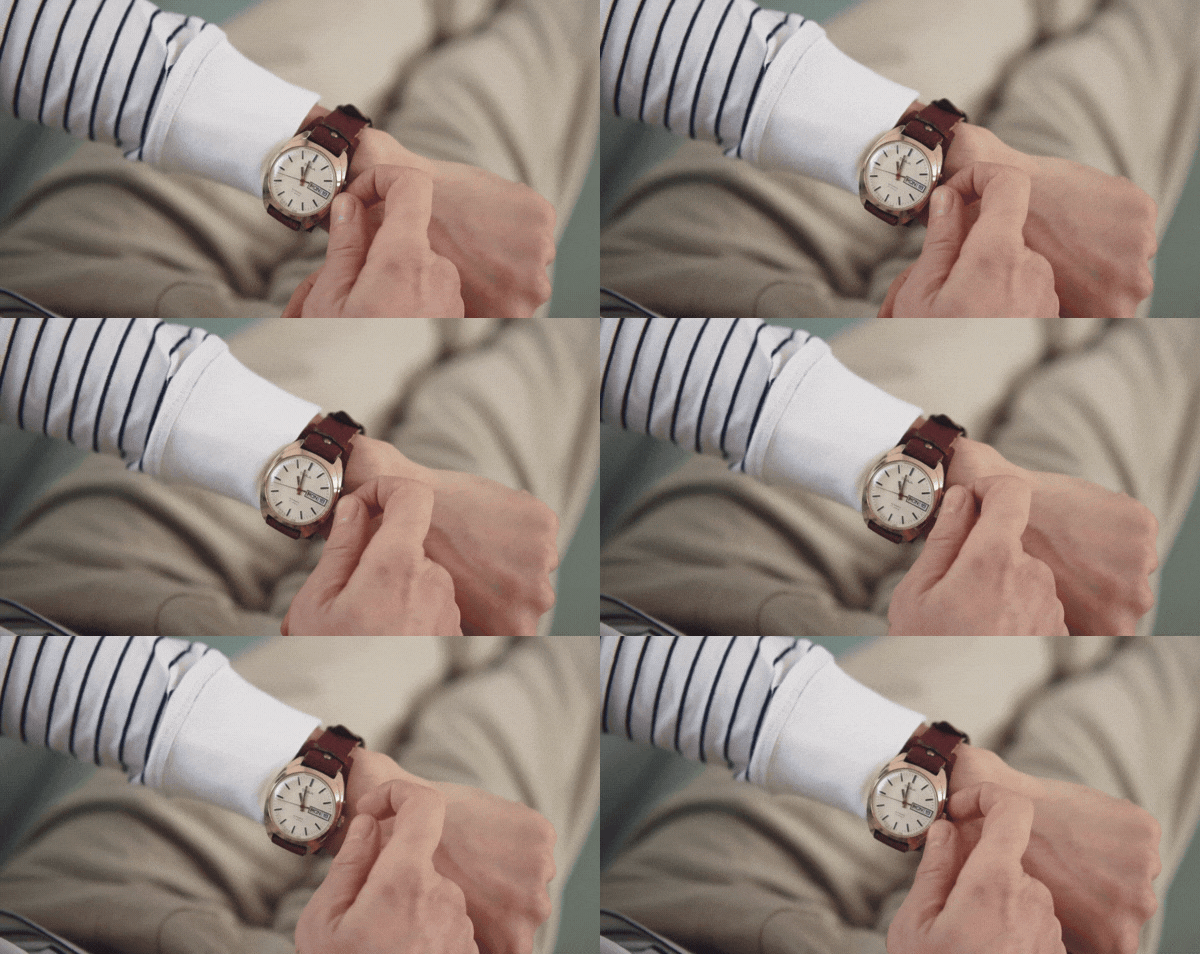
Not after you have set down your phone. Not after you have checked the next design. Right then.

Checking the time before peeling a transfer
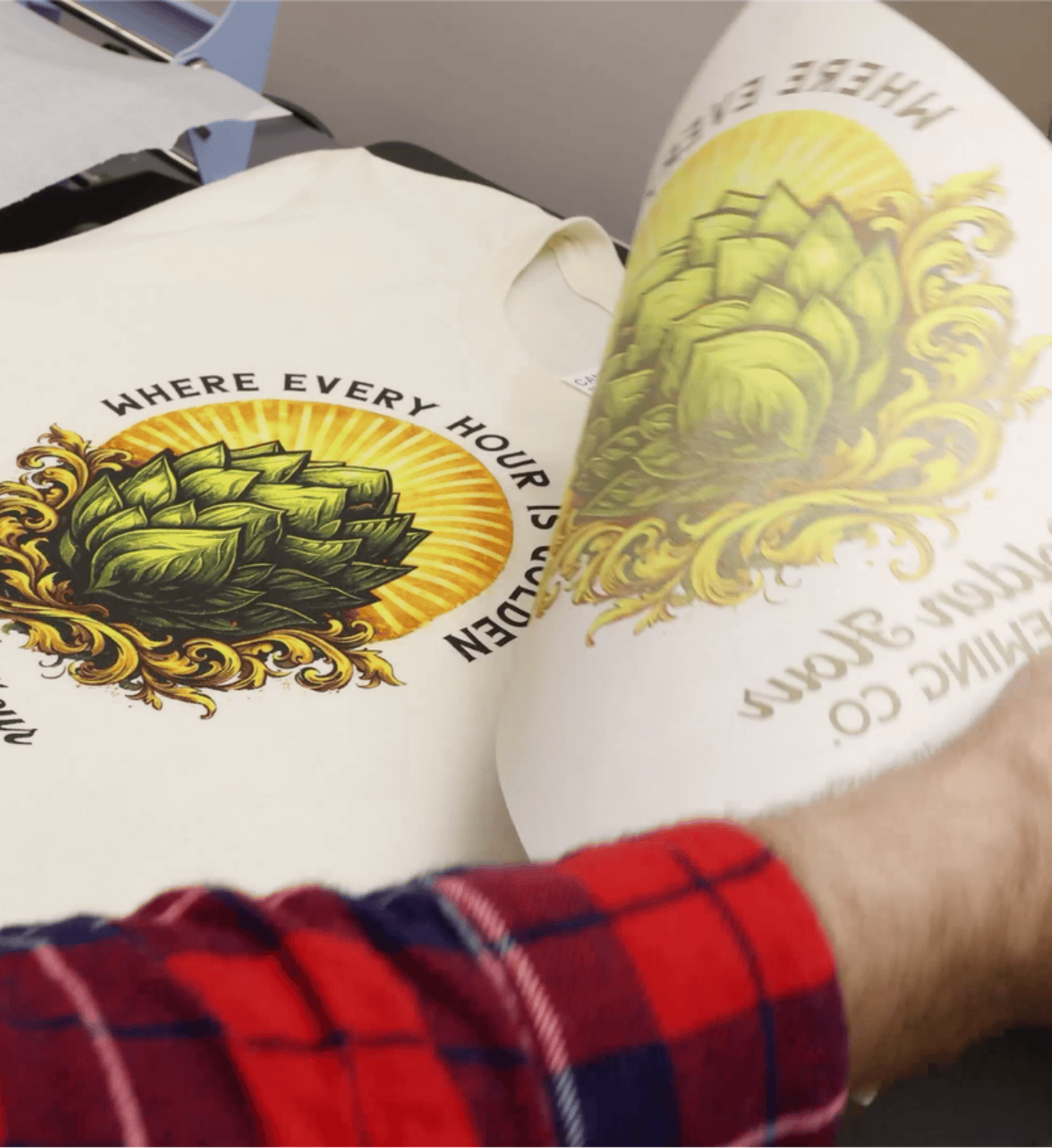
Transfer paper being peeled at a low angle from a shirt

How To Do It

The instinct is to grab a corner and pull up and away, like opening an envelope. That is the wrong angle. Lifting steeply puts tension in the wrong direction and can drag at the edges of the design.

Think of taking a sticker off a sheet, where the backing folds back on itself rather than lifting away.

1

One Corner To Start.
Lift a single corner rather than trying to get two hands on it. The rest follows on its own.

2

Keep The Angle Low.
Close to the surface, folding back across the garment, not up into the air.

3

One Steady Motion.
Not a rip, but not hesitant either. Consistency through the pull is what keeps the edges clean.

4

Do Not Stop Halfway.
Starting and stopping is what shows at the edges. Commit to the pull once you start it.

If You Would Rather Not Use Your Fingers

Nothing about the peel requires bare hands. Plenty of people who do this every day never touch the paper directly, and the result is identical.

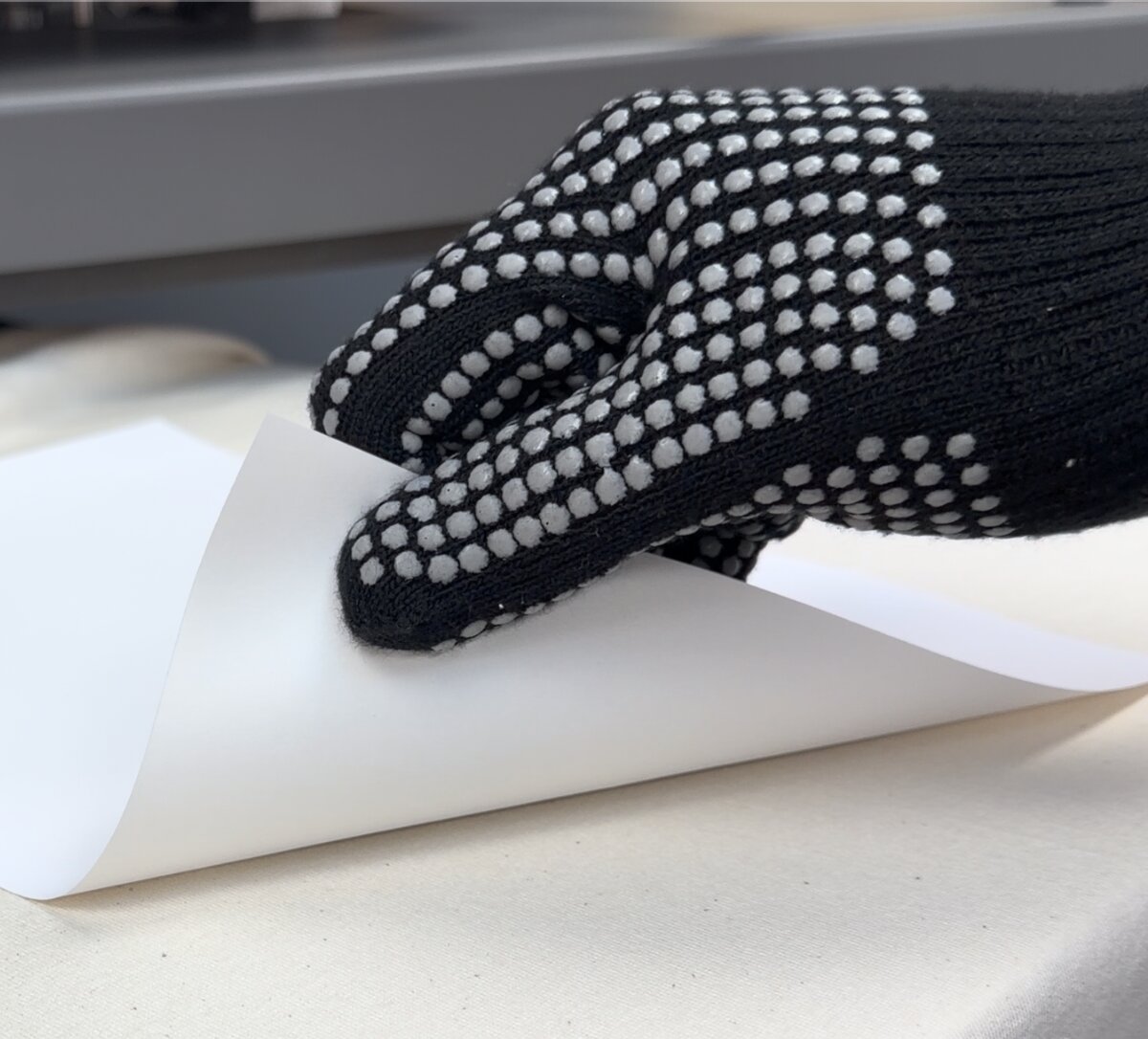
A heat glove lifting transfer paper

Heat Glove

Does the same job with a layer in the way. Bulkier on the initial corner lift, then no different.

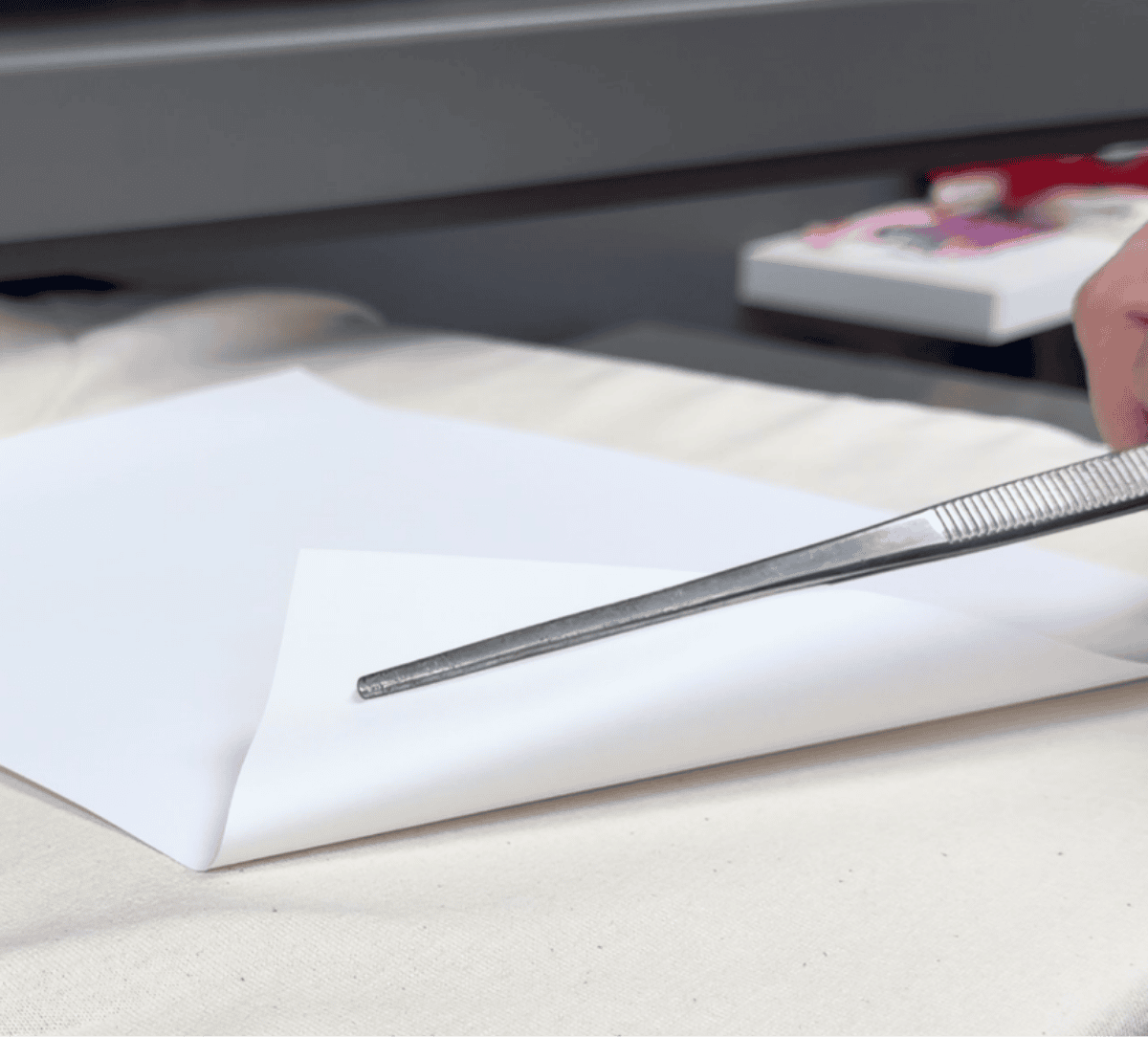
Tweezers lifting a corner of transfer paper

Tweezers

Lift the corner with a tool, then pull. Silicone fingertips give you grip without the contact.

What This Is Really About

Almost every new process has one step that looks harder from the outside than it is from the inside. For VersiFlex it is this one. People watch a demo and fixate on the peel, and then they do it themselves and it stops registering as a step at all.

If you are waiting to feel ready, you are waiting for something that arrives on the other side of doing it.

After that, the peel is just the moment you find out the design came out well.

See The Whole Process Start To Finish

Print, press, peel. One system, cotton and hard goods, no powders and no weeding.

Explore VersiFlex
Say Yes To More This Q4

Building A Product Line You Can Actually Deliver

The instinct in September is to add. The shops that get hurt in December are the ones that said yes to everything in September.

Every idea looks like money in September. A new blank, a new listing, a new photo, a new price point. It all feels like upside, because none of it has been produced yet. Nothing has gone wrong with it. There is no reject pile, no supplier who is out of stock, no customer asking where their order is.

That is the trap, and it is a comfortable one. The catalog you build in September is a promise your December self has to keep. Right now you are writing checks. In eleven weeks you are the one cashing them, at nine at night, alone, with a press that has been running since morning.

So the question worth asking is not what could I sell this quarter. It is what can I make four hundred of without the wheels coming off.

The Question Worth Asking

What can I make four hundred of without making extra work for myself overwhelming my workflow?

1

The Hidden Cost of One More Product

Adding a product is never just adding a product

A new item on the shelf looks like one decision. It is closer to six. Blanks you have to buy and store before anyone has ordered one. A test press to dial in. A listing to write. Photography. A price you have not pressure tested. And one mistake you have not made yet, because you always make one on a new product, and you have not made this one yet.

In February that is a fine trade. You have the hours, the mistake costs you a blank and an afternoon, and you learn something. In November it comes out of a different account entirely. It comes out of the time you needed for the orders people have already paid for.

2

What Actually Eats The Day

Setups, not demand

Watch where a production day actually goes. It is not the press cycle. A press cycle is sixty seconds and it runs whether you are standing there or not. The day goes to everything around it.

Changing the temperature and waiting for the platen to settle. Swapping the blank. Finding the right paper. Re-checking a setting you have not used since last week. Clearing the bench of one product to make room for the next. None of that is on your invoice, and all of it is on your clock.

Which means the real constraint on a small shop in Q4 is not how many things people want. It is how many times a day you change what is on the bench.

A day with three setups produces more than a day with nine, even when the nine-setup day has more orders in it.

This is why narrowing feels like giving up revenue and is actually the opposite. Fewer products does not mean fewer sales. It means more of the day spent pressing and less of it spent switching.

3

How To Pick Three

Five questions, and they are not negotiable

Take everything you are considering for Q4 and run it through these. Anything that fails one of them is not a bad product. It is a January product.

  • You have made it more than once. Not a sample. Not a prototype that came out great on the first try. You have produced it at least a few times and you know how it fails, because everything fails somehow and Q4 is a terrible time to find out how.
  • The blanks are in stock right now. Not orderable. Not arriving in October. In stock, from a supplier you have actually bought from, ideally one close enough to drive to. Every Q4 horror story starts with a backordered blank in the second week of November.
  • It presses in one setup. Same temperature band, same pressure, same bench arrangement as at least one other thing on your list. Three products that share a setup are faster than two that do not.
  • It reads as a gift. Someone has to look at it and immediately picture handing it to a specific person. If you have to explain why it is a good gift, it is not a Q4 product. It is a product you sell in March to people who already know you.
  • The price still works at three in the morning. Run the margin, then run it again assuming you are tired, you rejected two, and you are shipping it yourself. If the number only works when everything goes right, it does not work.

Three products that clear all five will outperform nine that clear three of them. That is not a motivational statement. It is what happens when you stop paying the setup tax nine times a day.

4

Where The System Does The Work

Narrow the SKUs, not the categories

Here is where most people push back, and fairly. Cutting to three products sounds like it means picking a lane. Either you are the drinkware shop or you are the apparel shop. And in Q4 that is a genuinely painful choice, because the two things people buy as gifts are something to wear and something to drink out of.

That choice is only forced if your equipment forces it. It does not have to.

The Paper Decides The Destination
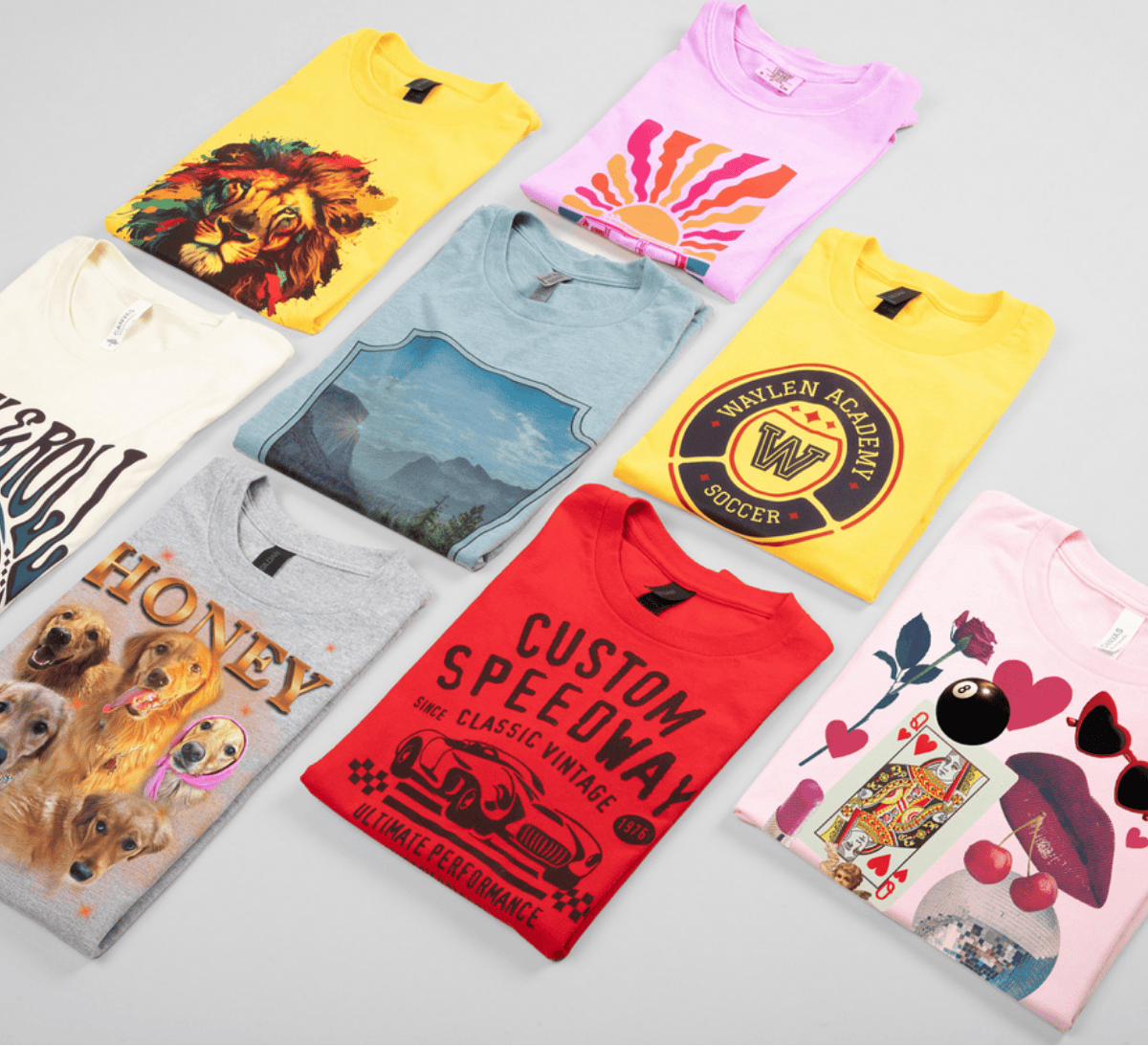
Colorful cotton apparel decorated with VersiFlex

VersiFlex Paper

Cotton apparel

Tees, hoodies, crewnecks, joggers, totes. Light, bright and white garments and natural fibers.

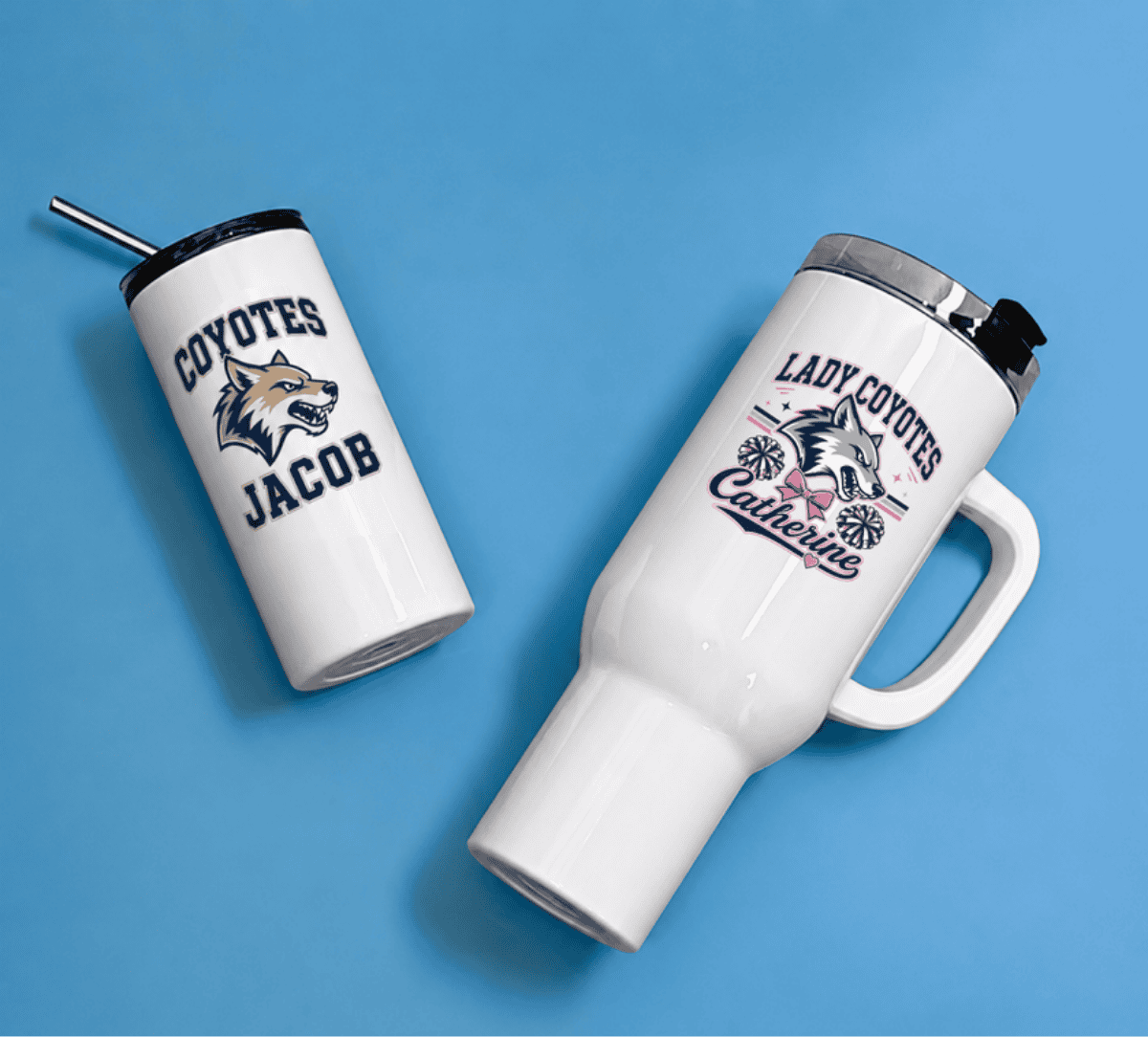
Personalized tumblers decorated using sublimation paper

Sublimation Paper

Sublimation blanks

Tumblers, mugs, ceramics, metals, ornaments, coasters. Everything you already run today.

That is the difference between narrowing your catalog and narrowing your business. A shop running two systems has to pick, because every product it adds on the other side of the room is a second setup, a second set of consumables and a second thing to stay sharp on. A shop running one system picks three products and can still cover both halves of a gift order.

Worth being specific, because it matters when you are quoting in October: the apparel side is built for light, bright and white garments. That is most of the everyday cotton on a rack right now, and it is where the team orders, the family sets and the small business merch live.

5

Where The Other Ideas Go

The cut list is an asset, not a graveyard

Cutting something in September does not mean it was a bad idea. It means it was an idea without a test run, and Q4 is the worst possible time to run a test.

Keep the list. Write down what you cut and why, because the why is the useful part. Blanks were not available. Never pressed it. Margin was thin. Different temperature than everything else. Those notes are your January work, and January is exactly when you want work that can afford to go wrong.

That is the trade. You are not deleting the idea. You are moving it to the month where a failed press costs you a blank instead of a customer.

6

What This Actually Buys You

Finishing is the strategy

In January, nobody is going to ask how many products you listed. Customers will ask whether you delivered on time, and they will decide next year based on the answer. The shop that shipped everything it promised is worth considerably more in January than the shop with the wider catalog and the apology emails.

Pick three. Make them well. Make a lot of them. Put everything else on the January list, where it belongs.

Have More Questions Before You Purchase?

Work out what each product actually returns per press cycle by using our ROI calculator and let the math assist you to pick your three.

You Can Sublimate On Cotton

You Can't Sublimate On Cotton, with Can't crossed out

For years the answer was no. Here is what changed, and what it means for the shop you are trying to build.
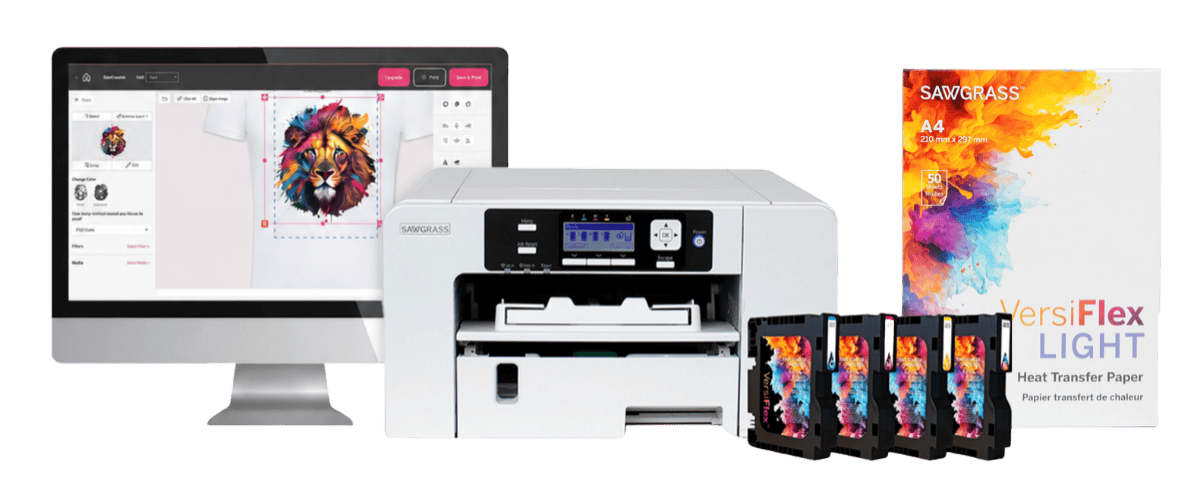
Sawgrass VersiFlex printer, inks, paper and design software

Where The VersiFlex System Came From

We Heard It For Long Enough To Do Something About It

Sawgrass has been building sublimation systems for a long time, which means we have heard this complaint from a lot of people who bought our printers. Not as a passing gripe. As the single thing standing between a working side business and a real one.

So we went and looked at the problem properly. And the thing that turned up is that the printer was never the limitation. Neither was the ink. The transfer paper was doing all the deciding.

Change the paper and you change what the machine is allowed to make.

That is what the VersiFlex System is. Not a different printer, not a second ink set, not a workflow to learn from scratch. A transfer paper that lets the Sawgrass printer you already own put a full color design onto cotton.

What It Actually Does

One Printer, Two Categories of Work

The workflow is deliberately boring, and that is the point. Print the design. Press it onto the garment. Peel the paper away. No cutting, no weeding, no powder, no film, no cure step.

The Paper Decides The Destination

Colorful cotton apparel decorated with VersiFlex

VersiFlex Paper

Cotton apparel

Tees, hoodies, crewnecks, joggers, totes. Light, bright and white garments and natural fibers.

Personalized tumblers decorated using sublimation paper

Sublimation Paper

Sublimation blanks

Tumblers, mugs, ceramics, metals, ornaments, coasters. Everything you already run today.

Same printer. Same ink set. Same bench. A mixed order with a shirt and a tumbler in it goes through one production line instead of two.

Worth being specific about the range, because it matters when you are quoting: VersiFlex is built for light, bright and white garments. That covers the natural, pastel and heather blanks that make up most of the fall and everyday apparel market, and it covers every cotton piece on the rack at a big box store this month.

The Other Route

What It Costs To Solve Cotton The Other Way

There are other ways to print on cotton, and it would be dishonest to pretend otherwise. DTF is a real answer and a lot of shops run it well. But if you are deciding where your next few thousand dollars goes, the comparison is worth doing with actual numbers instead of vibes.

DTFVersiFlex
Entry cost$1,500 to $5,000 to reach production readyUnder $2,000 for a complete system
EquipmentPrinter, film, powder, shaker, cure unitPrinter and heat press
Steps to a shirtPrint, powder, shake, cure, press, peelPrint, press, peel
Hard goodsSeparate system requiredSame printer, swap the paper
Bench footprintA second stationThe one you already have

Learn more about VersiFlex vs. DTF
VersiFlex vs DTF: Simpler Setup, More Products | Sawgrass

The number that gets missed in most comparisons is the second one. Very few shops replace sublimation with DTF. They add it. Which means the real cost is not $1,500 to $5,000, it is $1,500 to $5,000 plus everything you already own, two sets of consumables to keep stocked, two workflows to stay sharp on, and two production lines to route a single order through.

For a shop of one or two people, that overhead is not abstract. It is bench space you do not have, cash sitting in supplies you are not using this week, and a Tuesday afternoon spent moving between two machines to finish one order.

What Changes For You

What This Looks Like On A Normal Tuesday

Here is the practical version, which is really the only version that matters.

  • You stop turning down work. The cotton tee, the hoodie, the tote, the matching set. All of it is quotable now, from the machine already sitting on your bench.
  • Mixed orders stop being a problem. A customer wants twelve shirts and twelve tumblers for the same event. That is one design file, one printer and one afternoon.
  • Your blank supplier can be fifteen minutes away. Retail cotton means no minimums and no shipping window. Buy one, print it, see if it sells, then go back for six.
  • Complexity stops costing extra. Distressing, gradients, photo detail and fine line work all print the same as a single color, which is exactly the work a vinyl shop down the road has to talk a customer out of.
  • One thing to get good at. One workflow, one set of settings, one set of consumables. Skill compounds instead of splitting.

Learn How To Calculate Your ROI: ROI-Calculator – Sawgrass Technologies

Every piece of equipment you do not buy and every step you do not run twice goes straight back into margin. That is the actual print to profit math behind the cotton question. It was never really “can I print this.” It was “how many systems does this business need me to run, and what is each one costing me in cash, space and time.”

If You Are Just Getting Started

The Barrier That Used To Be There Is Gone

If you have been sitting on the edge of this, running sublimation as a hobby and wondering whether it can be more than that, understand what just moved. The reason most sublimation side businesses stall is not talent and it is not marketing. It is that the product range runs out. You can only sell so many tumblers to the same circle of people before you need the thing they actually wear.

Apparel is where the repeat orders are. It is where the team orders, the family sets, the small business merch and the event work live. Cotton was the door to all of it, and for a long time that door was closed to anyone who started on a sublimation printer.

It is open now, and it did not cost you a second machine to open it.

So the only question left is why wait

Sublimation can’t do cotton is a 2020s answer to a 2026 question. VersiFlex changed that answer.

Explore VersiFlex
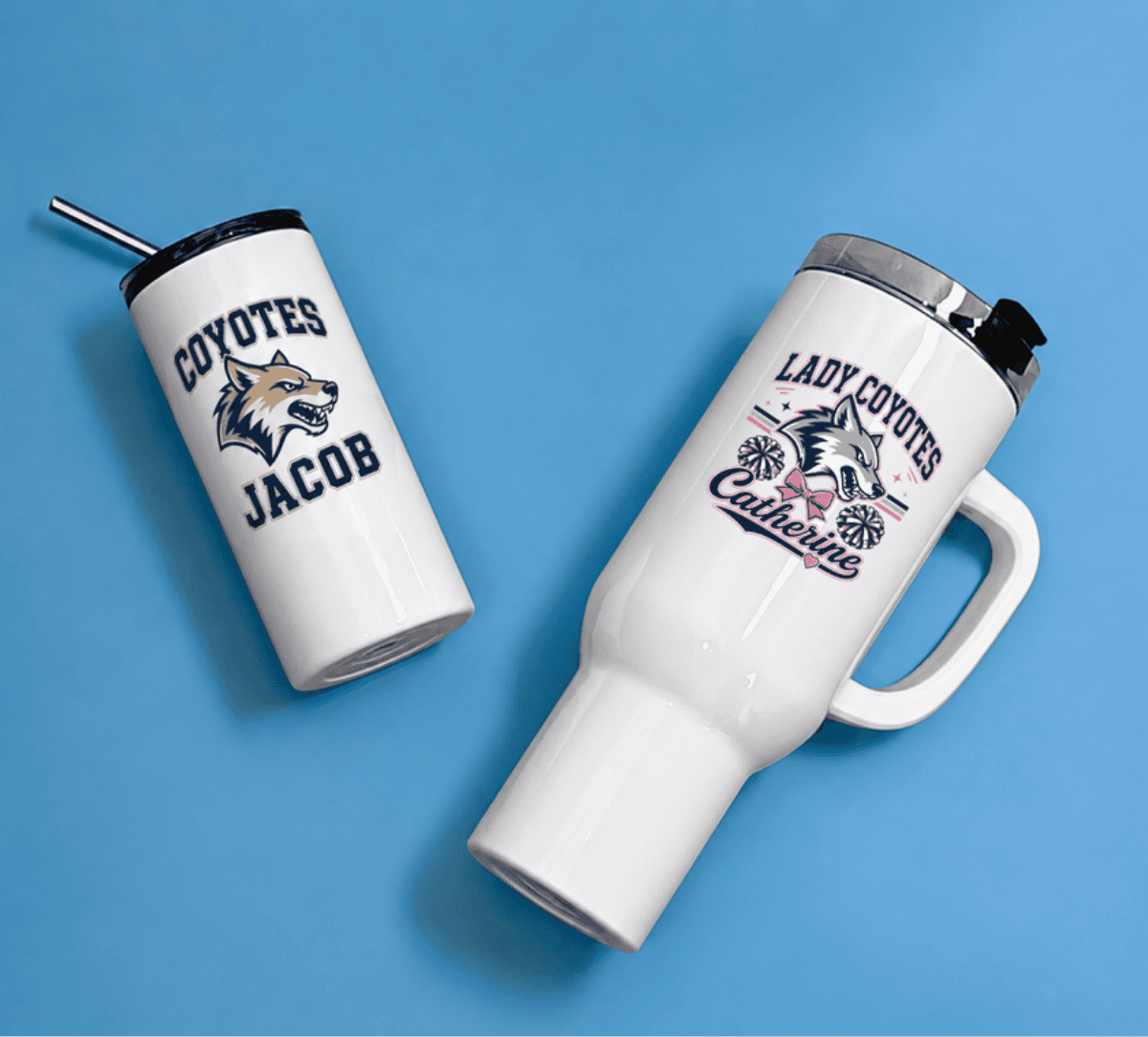
What Actually Changes When You Swap the Paper

One printer. One ink set. Two papers. Here’s what moves between a cotton tee and a ceramic mug, and what stays exactly where it is.

VersiFlex is the only patented decorating system in the world that lets you sublimate on cotton and on sublimation blanks. Most of the attention goes to the cotton half, which makes sense, because that’s the part that wasn’t possible before. The half that gets less attention is how you move between the two.

You change the paper. That’s the entire switch.

The real question is: what does it cost to switch?

With the same setup, you can move from TruPix for tumblers to VersiFlex Light for shirts without adding another machine or workflow.

One afternoon. One setup. More products you can say yes to.

Creator holding transfer paper behind a Sawgrass VersiFlex printer

The Two Papers

VersiFlex runs one printer, one ink set and one piece of software. The ink is built for both jobs, running cyan, magenta and yellow alongside an expander cartridge rather than a standard four color set. That’s what lets a single ink load cover two different transfer methods.

Which one you’re doing comes down to the sheet you print on.

FOR TEXTILES

Cotton, canvas, linen, denim, totes & hats

Self-weeding. No cutting or trimming

No pre-treatment or powder

Soft, flexible feel

FOR SUBLIMATION

Polyester, mugs, tumblers, slate, signage & photo panels

Traditional sublimation. Full-color results

Full hard-goods catalog

Each Paper Has Its Own Rhythm

VersiFlex Light Paper

Colorful VersiFlex Light transfer printing from a Sawgrass printer
The paper designed for cotton and other natural fabrics

Fast And Immediate

Print, press and then hot peel with one clean pull. Designed for cotton and other natural fabrics.

That immediacy is the point. There’s no cure time, no second machine and no waiting to find out whether it worked.

TruePix Sublimation Paper

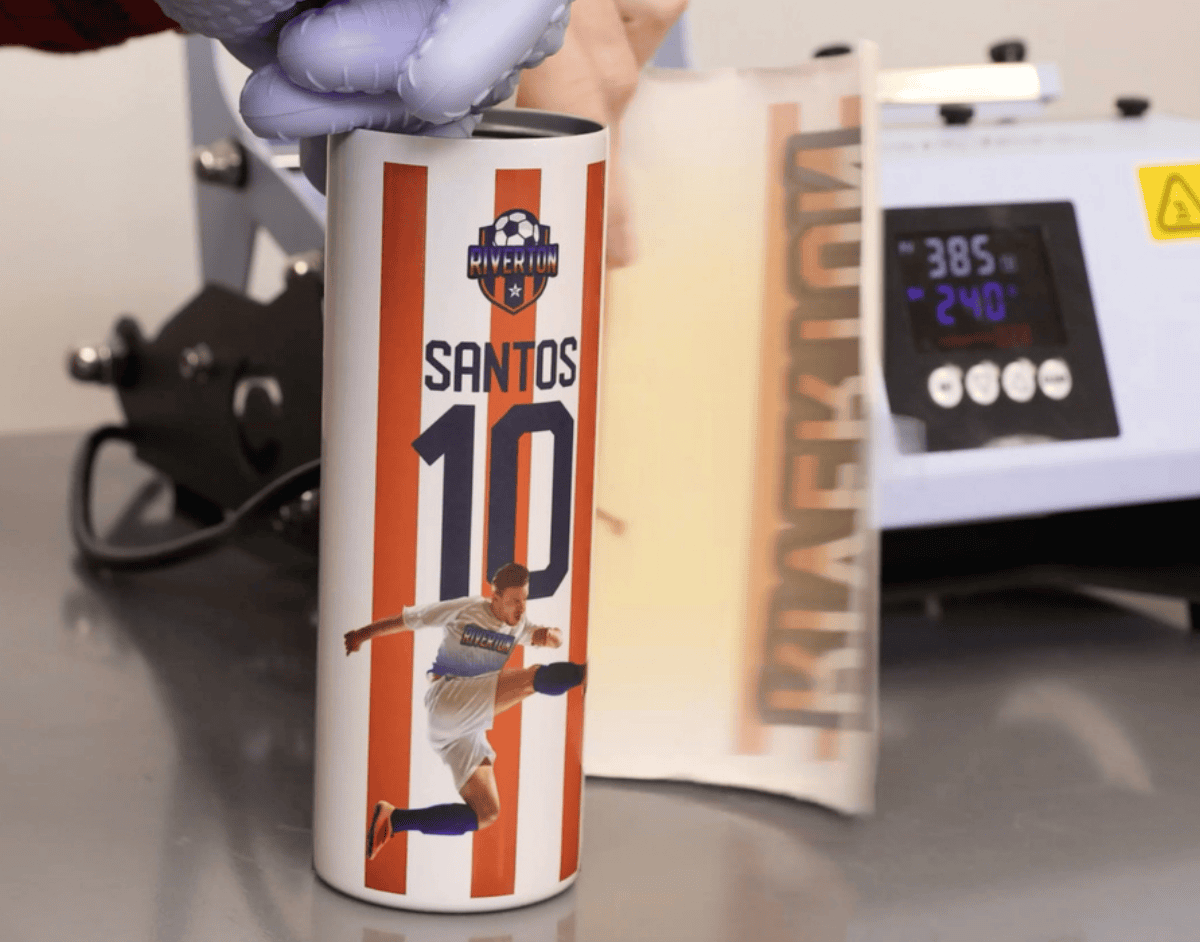
Personalized soccer tumbler being removed from a heat press
Designed for polyester and sublimation-ready hard sublimation goods.

Sublimation and More

Print and press using the sublimation process you already know. Designed for polyester and sublimation-ready hard sublimation goods.

It suits volume and it suits a production day where printing and pressing happen at different times.

What This Changes About What You Sell

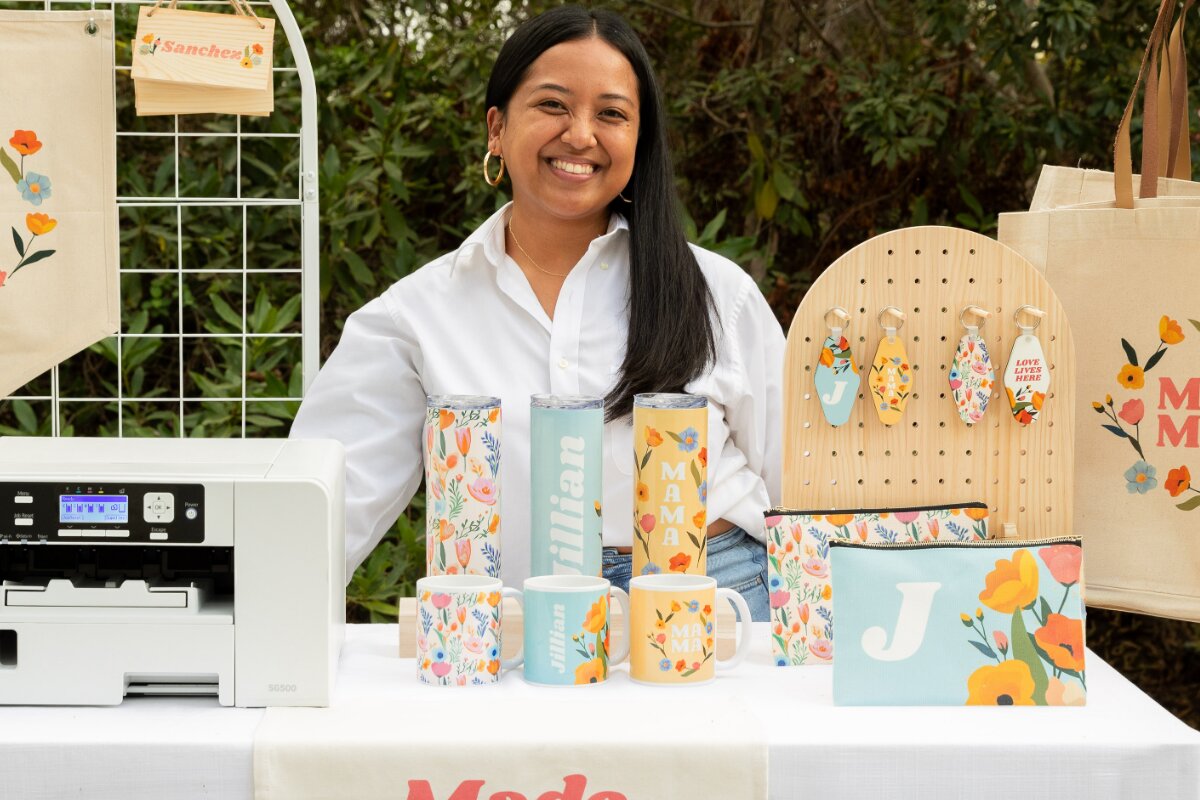
Creator producing personalized mugs, tumblers and accessories with VersiFlex
Creator displaying personalized apparel, drinkware and accessories

The obvious one is the order that spans both. A team wants shirts and the coaches want tumblers. A wedding wants tote bags and slate coasters. Those orders stop being a logistics problem and turn into one afternoon.

The less obvious one is that you can test a category without committing to it. Whether personalized ornaments are worth stocking is a very different question when finding out costs you a pack of blanks instead of a machine.

And there’s a third that shops tend to notice a few months in. Your listings, your product photography and your customer conversations all get simpler when the answer to can you do that on a mug too is just yes.

The Fall Cotton Lineup You Can Buy at Big Box Stores With


Every piece below came off a big box shelf. Joggers, crewnecks, hoodies, camo, a long sleeve tee. All cotton. All decorated with VersiFlex.

Sourcing blanks online means minimums, shipping windows and a box of forty sweatshirts you committed to before you knew whether the design would sell. Meanwhile there is a wall of fall cotton sitting at Target, Walmart, Hobby Lobby and Michaels, restocked weekly, marked down constantly and available in a size run you can buy two at a time.

The reason most decorators walk past that wall is simple. It is cotton, and sublimation does not print on cotton. VersiFlex is what changes the math. It prints on the same Sawgrass printer you already own and transfers onto 100 percent cotton with no weeding, which means the retail shelf becomes your blank supplier.

Here are five pieces we pulled and decorated, and the design play behind each one.

The Everyday Basics

Joggers, Crew Neck and Long Sleeve

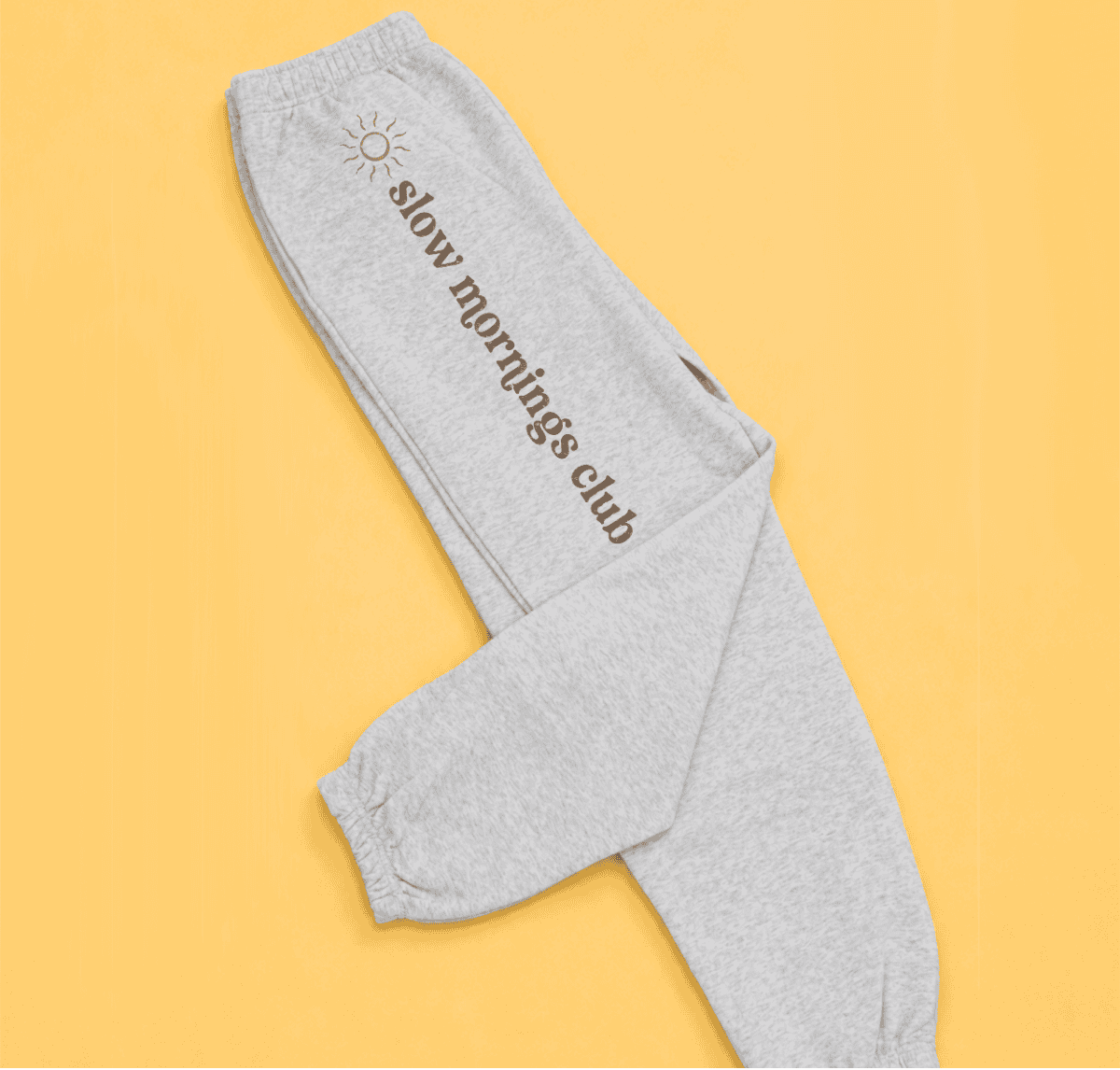
Cotton joggers decorated with a Slow Mornings Club design
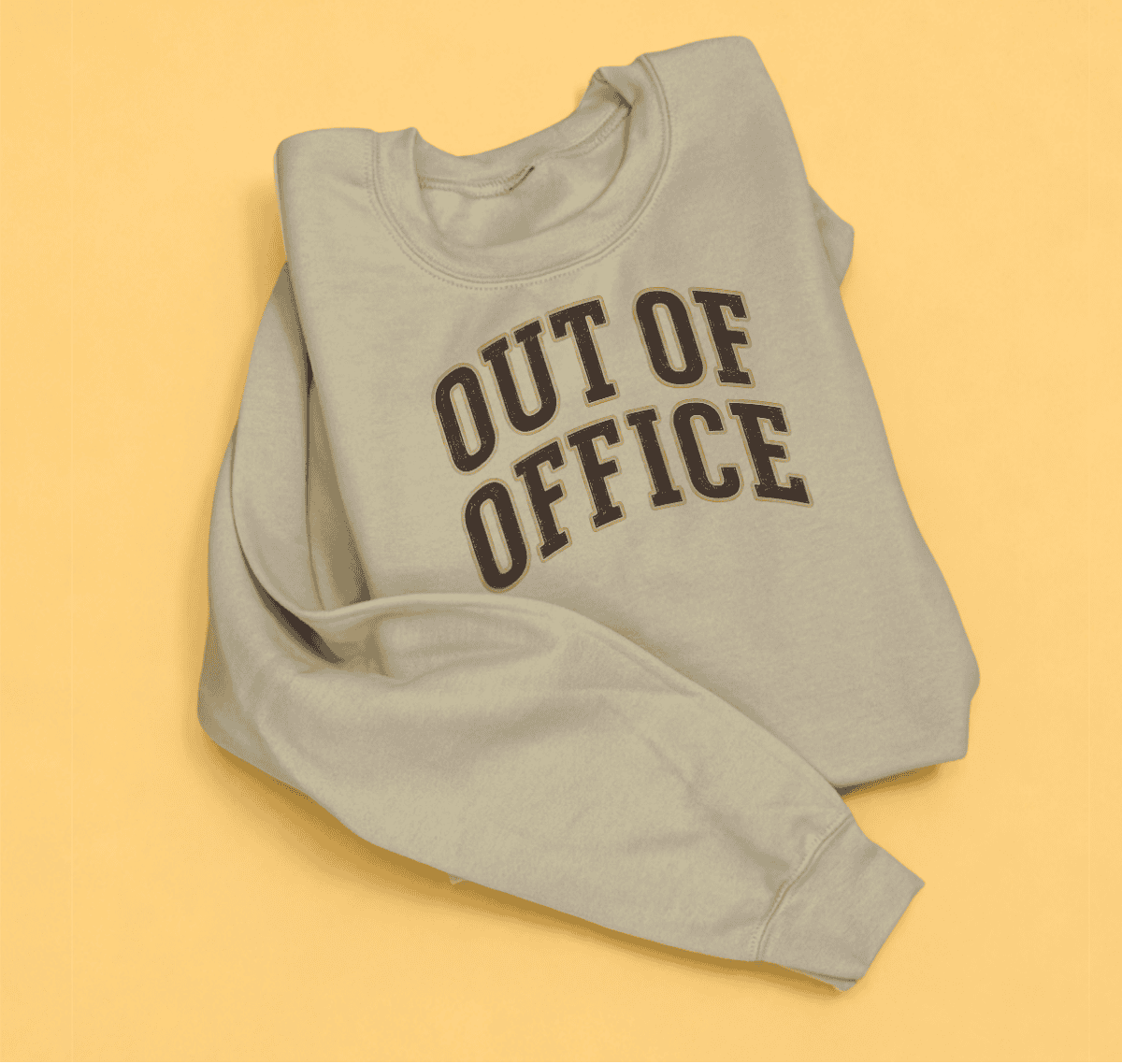
Neutral crewneck decorated with an Out of Office design
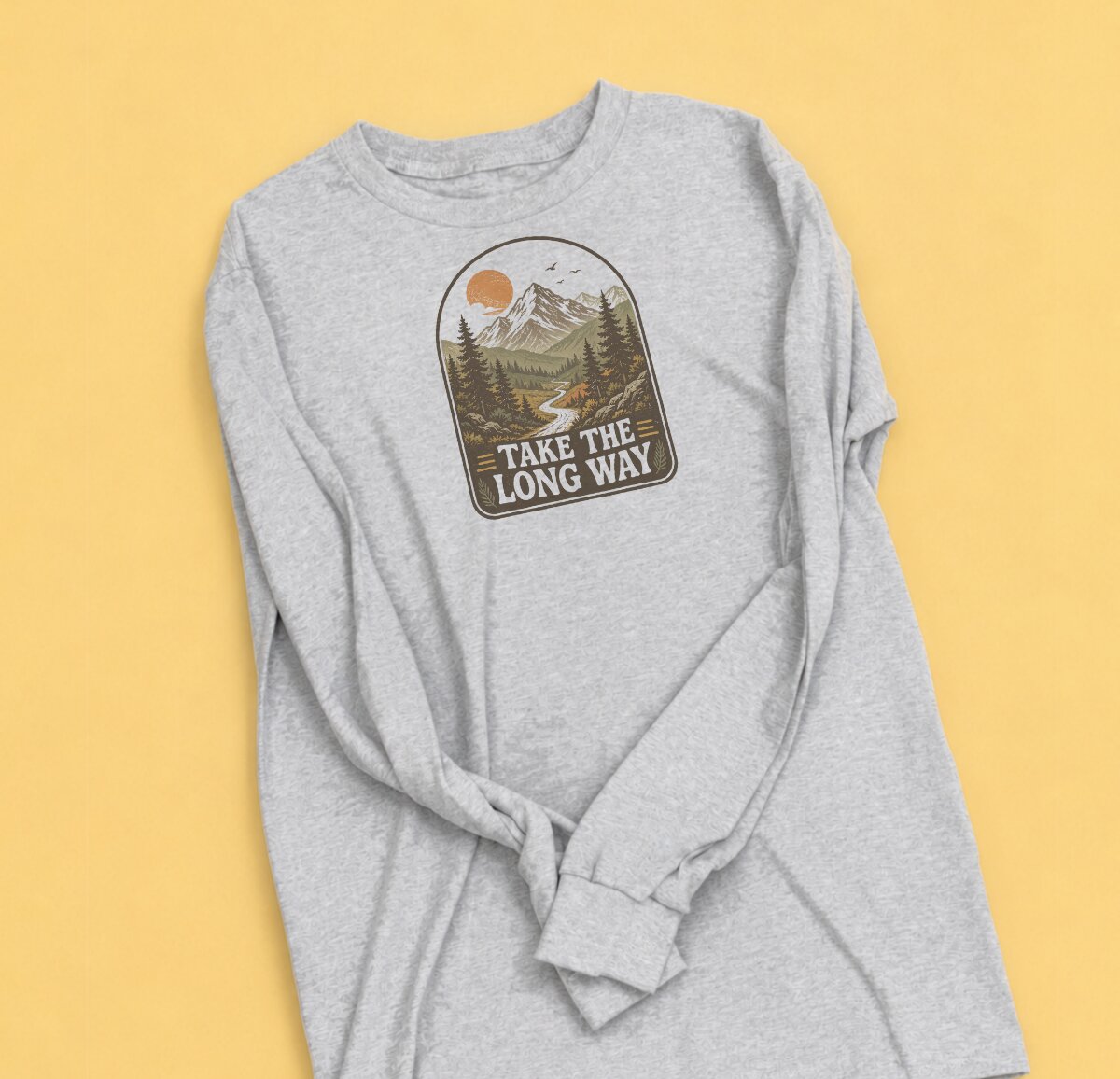
Long sleeve shirt decorated with a Take the Long Way design

These are the three fall blanks every big box store stocks, and all three print the same way. Cotton joggers are the sleeper piece, because everyone prints sweatshirts and nobody prints pants. The neutral crewneck sweatshirt moves the most volume, and the distressed texture behind that block text is exactly what vinyl cannot cut. The long sleeve tee carries September through November at a lower price point, with a full color badge pressed in one pass. Printing on cotton this way means gradients, distressing and full color all cost the same as one solid color, with no weeding and no cutter.

What To Check Before You Buy The Blank

Not every rack piece is worth taking home. A quick tag check saves a ruined garment.

Make Sure You CheckWhy Does This Matter?
The garments fiber contentCotton and natural fibers are the sweet spot for VersiFlex. Note the exact blend so you can repeat the press settings later.
Skip performance finishesWater repellent, stain resistant and moisture wicking coatings interfere with adhesion.
Watch heavy texturesSherpa, waffle knit and chunky ribbing do not give you a flat press surface. Stick to smooth fleece and jersey.
Buy one and test it firstBefore you clear the shelf, press a single piece and wash it. Retail garments vary by brand more than wholesale blanks do.
Photograph the tagWhen the design sells and you need twelve more, you want the exact brand and style you tested.

The Patterns: Camo

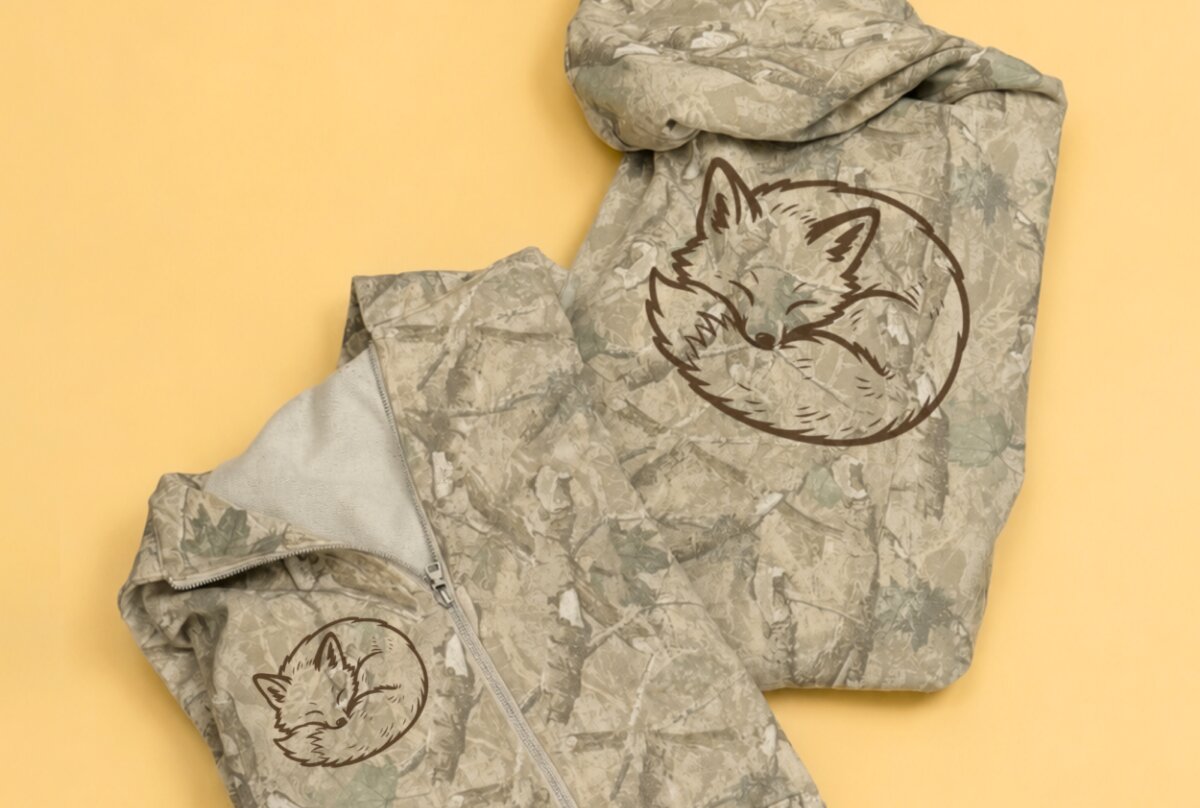
Camo hoodies decorated with curled sleeping fox designs

Camo zip hoodie decorated with a curled sleeping fox

Camo hits shelves in August for hunting season and it is a whole market most crafters ignore. Outdoor buyers, hunting camps, family sets and gifts for the person who is genuinely hard to shop for.

Patterned blanks are also where a lot of decorators get nervous, because busy artwork on a busy garment turns to mud. The fix is tonal. One color of ink, pulled from the pattern itself, so the fox reads as an outline sitting on top of the camo instead of fighting it. Same approach works on plaid, tie dye, floral and any other print big box stores put out in fall.

Buying retail also lets you do the thing that sells hardest here: matched sets in different silhouettes. A pullover for one person and a zip for the other, same artwork, sized separately, bought off the rack in whatever mix the family needs.

Colored Apparel: Purple Hoodie

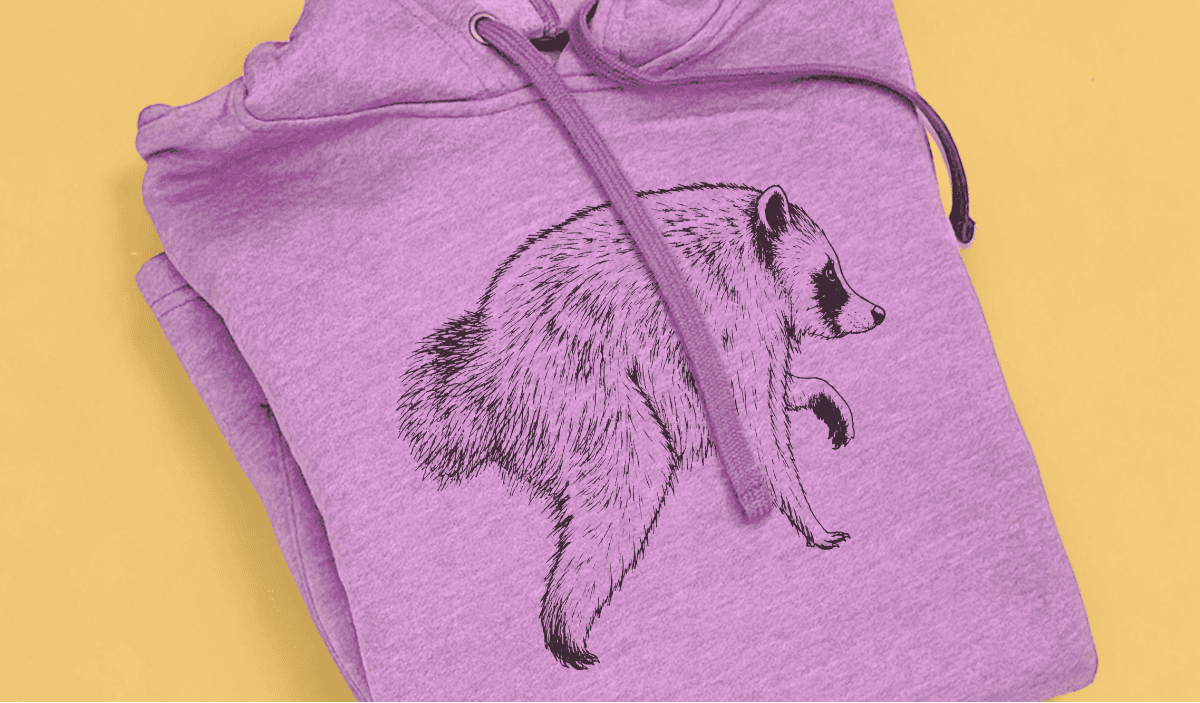
Purple hoodie decorated with a detailed raccoon illustration

Purple hoodie decorated with a fine-line raccoon illustration

Colored garments are where cotton decorating usually falls apart. Print on a saturated base and the artwork either goes transparent or the fine lines fill in. This one is a fine line raccoon sketch of Jimothy VersiFlexed onto a purple sweater.

Muted colors are the garments customers actually reach for in fall, and they are usually the ones sitting on markdown because nobody knows what to do with them.

Detailed animal illustration is also one of the most reliable sellers in the fall market. Raccoons, mushrooms, moths, foxes and frogs run the cottagecore side of Etsy right now, and the more detail the design carries, the further it sits from what a vinyl shop down the road can produce.

Why Retail Blanks Work for a Small Shop

  • No minimums: Buy one, print it, list it, see if it sells. Then go back for six.
  • No shipping wait: A rush order on Wednesday can ship Thursday because your blank supplier is fifteen minutes away.
  • Clearance is margin: Off-season markdowns and holiday sales drop your cost per piece well below wholesale, and nobody asks what you paid.
  • Real size runs: Buy the sizes a customer actually asked for instead of eating a case of smalls.
  • Trend timing: Big box buyers already did the color forecasting. Whatever is stacked at the front of the store in September is what people want to wear in October.

One Printer, the Whole Fall Table

The reason this lineup works as a lineup is that none of it required new equipment. VersiFlex handles the cotton joggers, crewnecks, hoodies and tees on the same Sawgrass printer that runs sublimation for your tumblers, ornaments and hard goods. No DTF station in the corner, no cutter, no weeding, no separate workflow to learn.

Which means a fall table can hold a matched loungewear set, a camo hoodie, a graphic long sleeve and a row of drinkware, printed by one person on one machine between now and the first market of the season.

Go look at what your local stores put out this week. Then see what the system can print using VersiFlex.

Explore VersiFlex
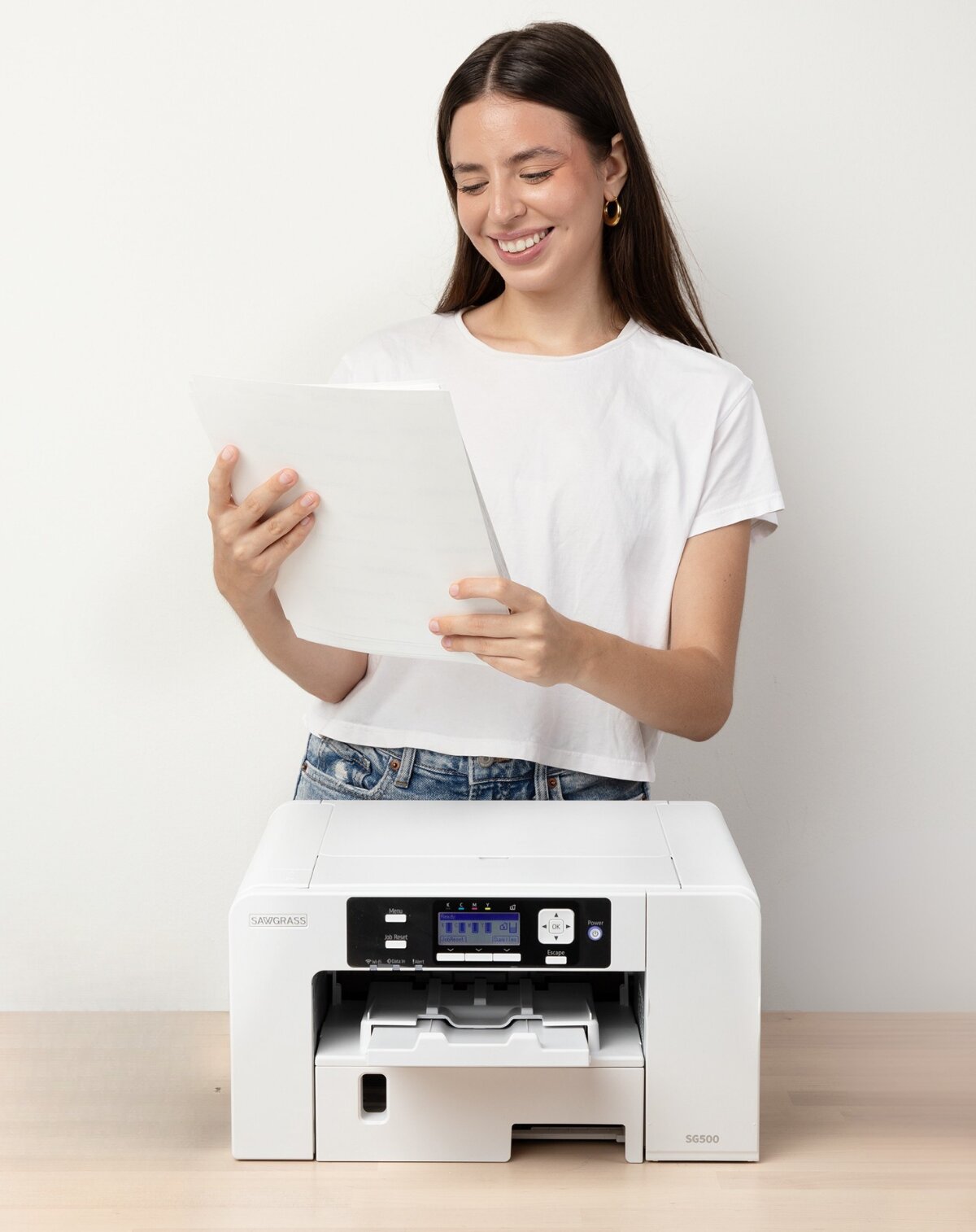
The August Rehearsal

November is not the month to figure out your workflow. Here is what to practice now, while mistakes are still cheap.

A colorful design being heat pressed

Ask any shop that shipped clean through last holiday season what made the difference, and almost none of them will point to something they did in November. They will point to August. To the weeks when the order queue was short enough that a bad press was a shrug instead of a crisis.

That is where you are right now. The calendar is quiet, the pressure is low, and every mistake you make this month costs you almost nothing. Come November, the same mistake costs you a customer. So treat August like what it is. A rehearsal.

01 |

Practice on blanks you do not care about

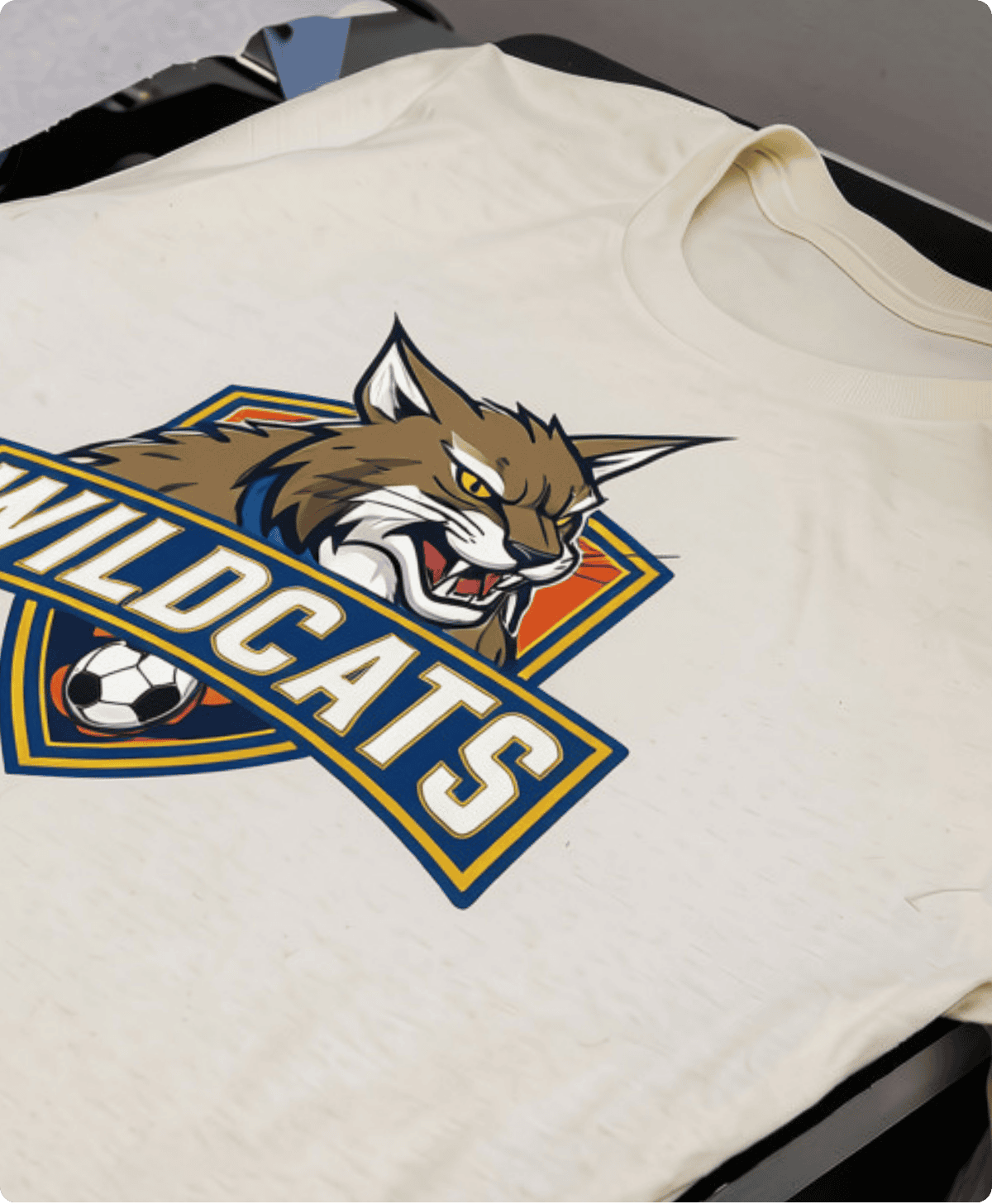
Wildcats design pressed onto a light-colored shirt

The fastest way to learn a press is to stop protecting your inventory.

One thing to keep in mind on thrifted cotton: VersiFlex is built for light and white garments, so pull the pale pieces off the rack and leave the darks behind.

Thrifted pieces, seconds, the shirt that came back with a placement you hated. These are the best training material you will ever have, because failing on them is free.

Run your placements. Find out where a design actually sits on a real garment instead of where it sat on the mockup. Press the same design three times at three different settings and look at all three side by side. Nobody learns pressure and dwell from reading about it.

02 |

Run the category before its season arrives

Halloween pumpkin character printed on an ornament

Rehearse the workflow on a season that does not matter yet, so the season that does matter finds you already fluent.

Same blank.
Same press settings.
Same workflow from design to finished piece.

Here is the trick almost nobody uses. If you want to be fast at Christmas ornaments in October, make Halloween ornaments in August.

Same blank. Same press settings. Same workflow from design to finished piece. The only thing missing is the pressure, which is exactly the point. By the time the real orders land you are not learning the process, you are just running it.

It works across the board. Fall towels teach you the same thing holiday towels will ask of you. A run of spirit wear tees is practice for a run of family matching sets. The season changes, the workflow does not.

03 |

Build templates, not one-off files

Fall sports is the clearest case. Team name, mascot, year, player number. If you build that as a single design for a single team, you will rebuild it from scratch for every team that calls. If you build it as a template with swappable fields, the next order takes minutes.

The same logic covers monograms, family names, dates and est. years. Anything a customer personalizes is a field, not a design. Set it up once now, and the whole fall runs faster because of it.

This is also where a lot of quiet margin lives. The order is not more expensive to fulfill because it has a name on it, but it is worth more to the person buying it.

04 |

Find out how long things take

Time one full run, start to finish. Not the press cycle, the whole process: design prep, print, press, peel, fold, pack. Most shops have a rough guess and almost none of them have a number.

Design preparation iconPrinting iconHeat press iconPeeling a transfer icon

You want the number for two reasons. It tells you whether you can honestly say yes to a fifty piece order with a Friday deadline, and it tells you what your time is actually worth on each product you sell. Both of those get very expensive to guess at once Q4 starts.

The quiet season is the advantage

None of this is glamorous, and none of it will get posted about. Practicing on a thrifted shirt is not a milestone. Timing your own workflow is not a launch.

But the shops that move fast in December are not working harder in December. They are working from muscle memory built in August, on orders nobody was waiting on, with blanks nobody paid for.

August is the cheapest month of the year to be bad at something. Spend it.

One printer, one workflow, the whole rehearsal

VersiFlex lets you practice across cotton apparel and sublimation blanks from the same Sawgrass printer, so the reps you put in on one product carry straight over to the next.

Explore VersiFlex

How to Land Your First Team Order

Every August, rosters go up and somebody in every group chat gets put in charge of matching gear. That somebody is your first team order.

Matching baseball camp shirt, drawstring bag anteamblog-d water bottle
High school sports just set an all-time participation record, 8.26 million athletes and a third straight year of growth per the NFHS, while families now spend over $1,000 a year per athlete according to the Aspen Institute’s Project Play. More teams than ever, budgets already committed, and every one of them needs to look like a team. That’s spirit wear, and it’s yours to win.

Team orders come from people, not teams

Teams don’t buy anything. Five findable people do, and at least two of them are already in your phone:
Matching team shirt, drawstring bag and water bottle

The Booster Club Parent

Buys in quantity because spirit wear is a fundraiser. Show them the margin between your price and the game-day table and you’ve made a partner.
Matching team shirt, drawstring bag and water bottle

The Rec League Coach

Tees, can coolers, bag tags, and a reorder every season if the first order was painless. One coach is a subscription.
Matching team shirt, drawstring bag and water bottle

The Cheer Coach

The most personalization-hungry buyer on the list. Names on everything, tumblers and practice tees, a whole squad that wants matching and mine at the same time.
Matching team shirt, drawstring bag and water bottle

The PTA

The school’s parent teacher organization. Thinks in school-wide quantities: spirit days, teacher shirts, fun run tees. Slowest yes, biggest orders.
Matching team shirt, drawstring bag and water bottle

The Travel Team Manager

The premium buyer, and a traveling billboard. Tournament weekends put your work in front of every other team’s parents.

All five want the same thing, and it isn’t the lowest price. It’s not having to think about it. Make ordering painless and the reorder is yours forever.

Sell the season, not the shirt

A team’s identity isn’t one product. It’s the tee, the tumbler on the bench, the can cooler in the bleachers. Sawgrass VersiFlex is the only system that decorates both cotton and sublimation blanks, so when the booster parent asks “can you also do cups?”, the answer is yes, same design, same printer, same day. Print, press, peel, no weeding, no powder. And a roster order isn’t one design 14 times, it’s 14 names and numbers. VersiFlex prints every variant as easily as one, with no minimums and no setup fee punishing the kid who joined late. That’s the exact flexibility the big apparel vendors can’t offer a 14-kid rec team.
Design noteVersiFlex loves lights and brights, so build team designs to pop on white, gray and light garments. Let the team colors carry the design. It photographs better from the bleachers anyway.

Work backward from tryouts

The merch conversation happens in the narrow window between “we made the team” and the first game. Miss it and the order goes to whoever answered fastest, usually an online transfer shop with a two-week ship time. So be there before the roster goes up: message the coach you know in July, have one sample set pressed (a tee, a tumbler, a can cooler in one palette), and let speed close the deal. A Sawgrass maker turns a roster around in an afternoon. Start with one buyer you already know. In team sports, everybody sees everybody’s gear, which means your first team is also your best ad.

The season is picking teams

One system covers the tees, the tumblers and everything the bleachers carry. See what VersiFlex can press before the first whistle.

Explore VersiFlex

The Back-to-School Rush Already Started. Here’s What to Print First.

If two-thirds of buyers are already shopping, a product line that goes live in mid-August is not early. It is late.

Personalized back-to-school shirt, notebook and drinkware

Somewhere out there, a parent just bought a backpack and sunscreen in the same cart. They are not confused. They are early, and they brought friends.

According to the National Retail Federation’s annual survey with Prosper Insights & Analytics, 67 percent of back-to-school shoppers had already started buying by early July 2026. That’s up from 55 percent last year and the highest share NRF has recorded since it started tracking early shopping in 2018. A third of shoppers were buying in June, while the pool floats were still out.

67%Already shopping by early July
$39.4BProjected back-to-school spend
$858Average family budget

Source: National Retail Federation and Prosper Insights & Analytics, “Back-to-School Season Begins Early for Majority of Shoppers.” nrf.com

Why so early? Half of families said they are shopping now because they expect prices to climb later, and 4 in 5 are timing purchases around July sales. The money is real: $39.4 billion projected, with the average family budgeting $858.07 for clothing, shoes, supplies and electronics.

Sit with that budget number for a second. That is money already committed to school purchases. A personalized tumbler is not fighting for impulse-buy attention. It is claiming a slice of a pie the family already baked.

For makers, that changes the calendar. The sellers who treat July as launch month instead of prep month are the ones who catch this spending before it walks off to a big-box aisle.

01

Start with what personalization actually sells

Back-to-school season is basically a personalization holiday. Every kid needs their stuff labeled, every family wants their kid’s stuff to be theirs, and nobody is ordering 50 units of anything.

That is the exact game sublimation wins. A name, a grade, a team color or a favorite phrase goes on a product in one press cycle. Print, press, peel. No minimum order, no setup fee that punishes a single custom piece. A focused product line does not need to be big.

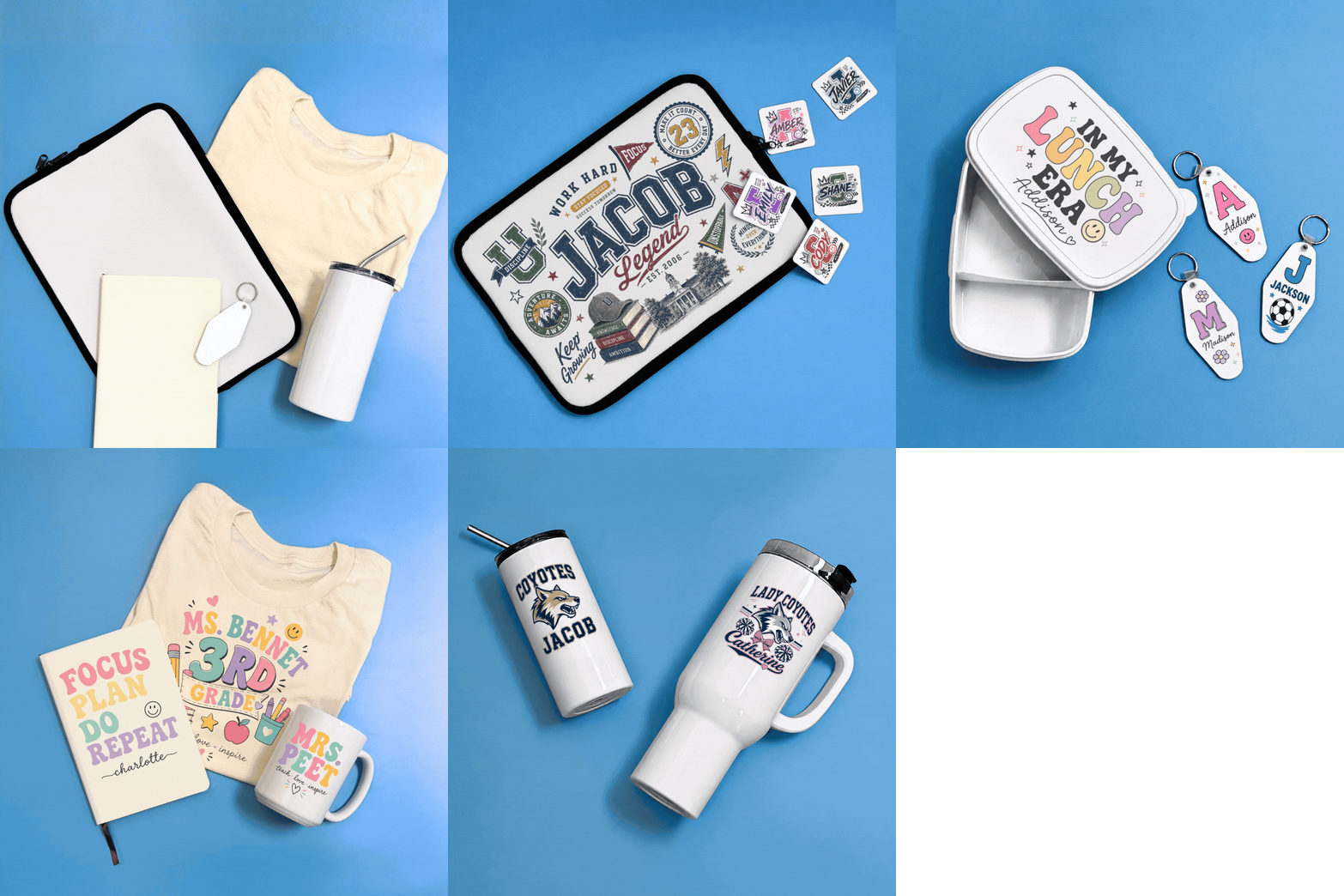
Four categories consistently convert in this window:

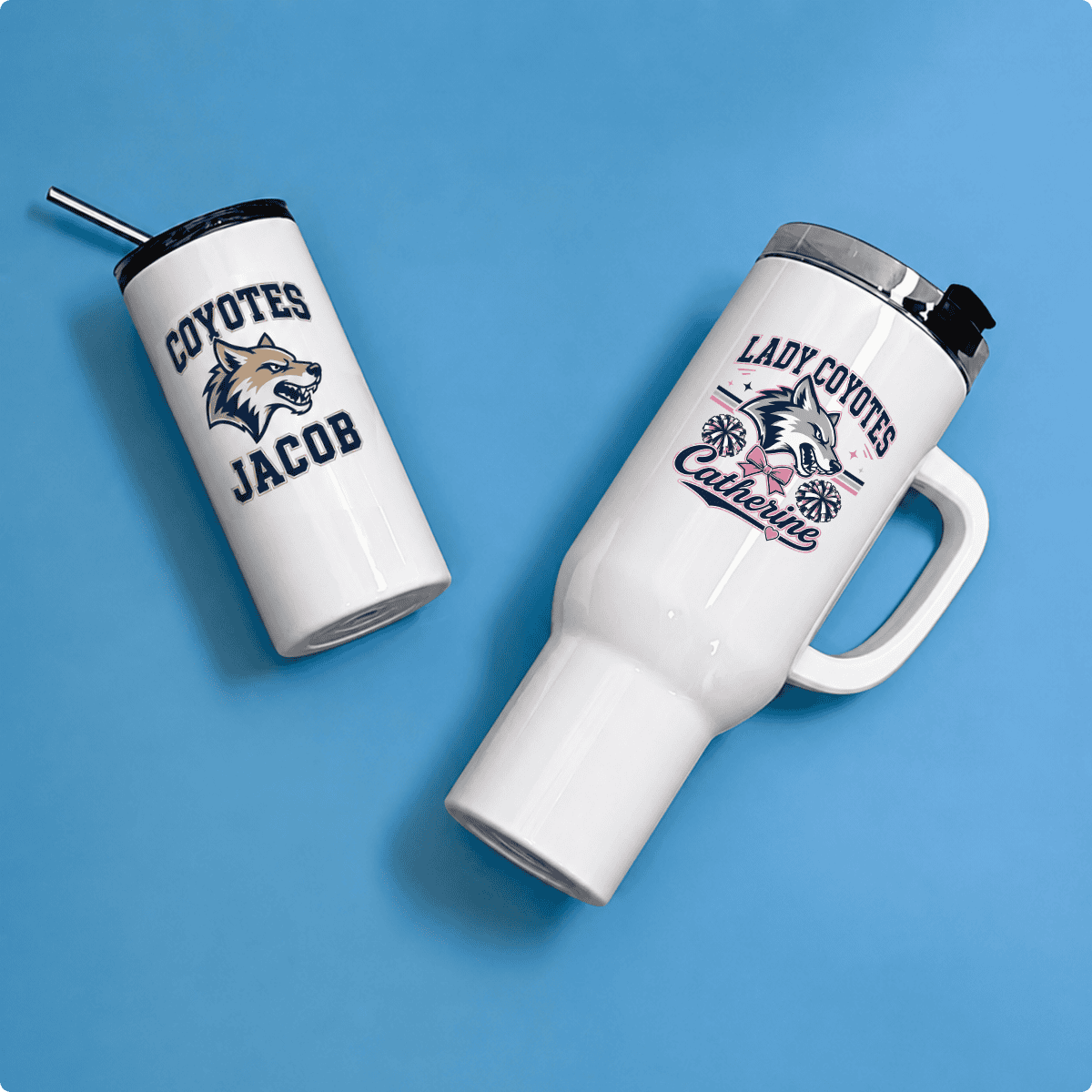
Personalized school mascot tumblers

Name-Drop Drinkware

A personalized water bottle or tumbler solves one of childhood’s great mysteries: where the water bottles go. A first name and a mascot is all the design it takes, and it’s one of the highest converting items of the season.

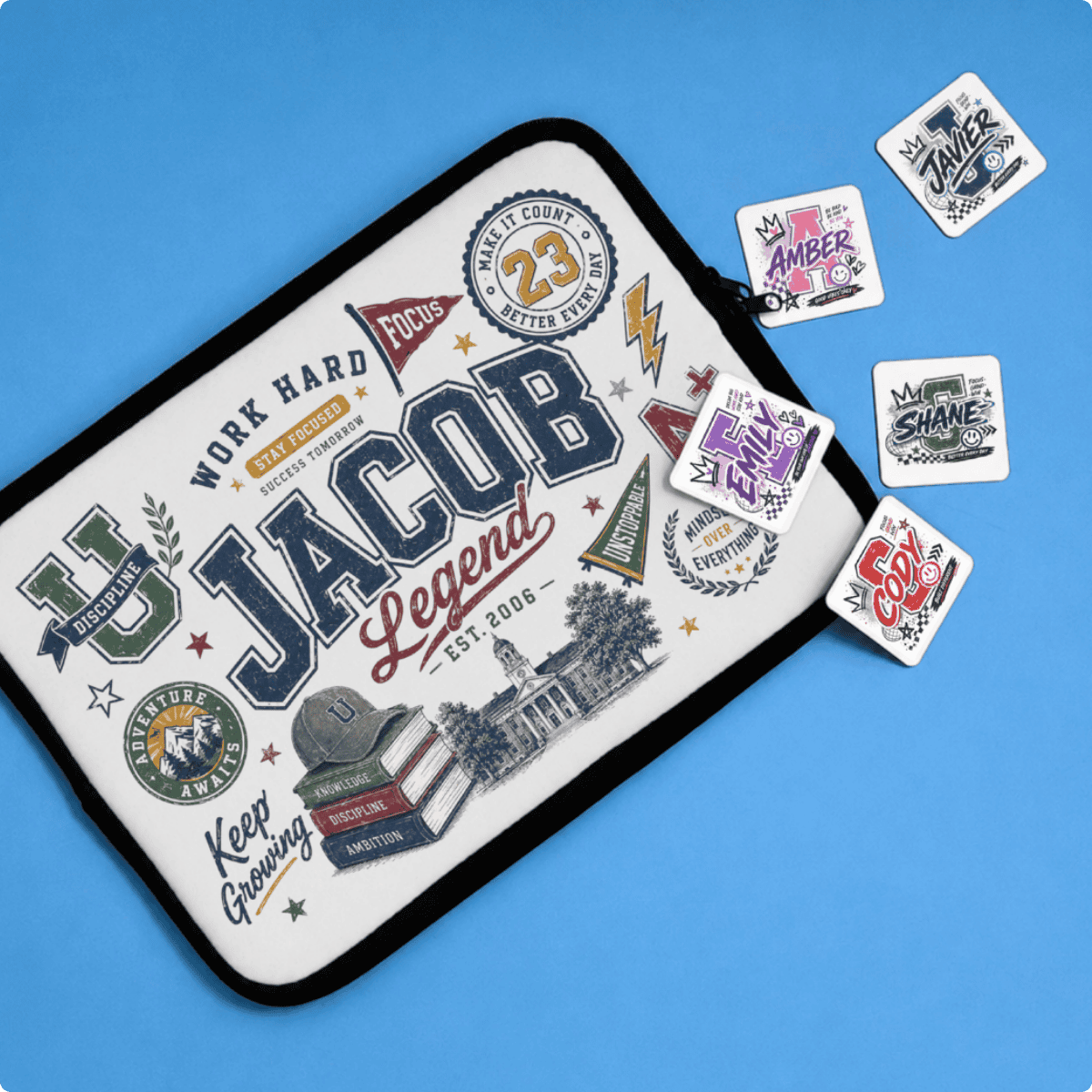
Personalized college laptop sleeve and locker magnets

Dorm & Locker Decor

College move-in and locker decorating share this buying window. Personalized magnets for the locker door and custom laptop cases for the dorm desk, straight off the same system you already run.

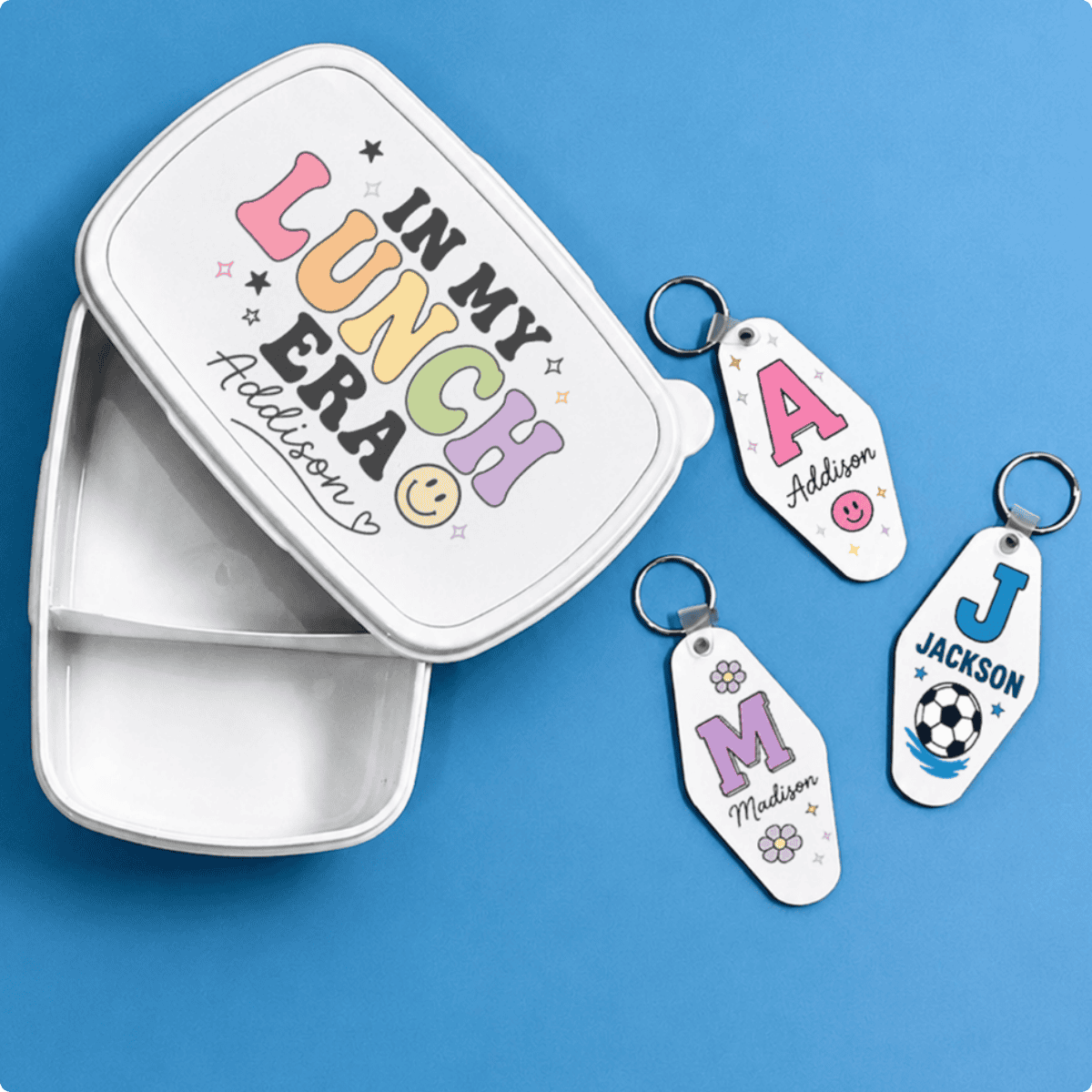
Personalized lunch box and backpack keychains

Backpack Charms and Lunch Gear

A name keychain on the backpack zipper is the tag every kid actually wants, and a personalized bento box settles whose lunch is whose forever. Small, fast and the quickest category to produce in volume when a classroom comes calling.

Personalized teacher shirt, notebook and mug

Teacher Gifts

Teachers can spot a last-minute gift card from across the room. A tumbler or tote with their class name on it lands differently, and it makes you the shop parents come back to in December.

These four share a superpower: none of them need a big run to be worth making. One parent, one kid, one tumbler is a complete, profitable transaction. That single-unit economics is how a small shop competes in this season against retailers a thousand times its size.

Did you know

VersiFlex holds a quality image for up to 30 washes. A school year’s worth of laundry is exactly the stress test it was built for, on cotton that still feels like cotton.

02

Build backward from the date, not forward from your to-do list

The classic mistake is treating back-to-school as one deadline. It isn’t. It’s a rolling window: some districts open in early August, others run into September, and college move-in stretches it further still.

The rule of thumb: find the earliest start date your audience cares about and get product listed four to six weeks ahead of it. Early August districts? That listing needs to be live now. September starts and college move-in? You have runway, but it closes faster than it looks once August hits.

And keep the line tight. A maker who lists three well-designed, clearly personalized items this week will outsell the one who lists twenty generic ones in August. The data agrees: 82 percent of shoppers are buying around a specific sale window. They want the thing that answers their need fast, not a catalog to scroll.

Your to-do list will happily eat August if you let it. Don’t let it.

Keep the seasonal engine running

Back-to-school is one window in a year full of them. For the summer-side niches still converting right now, read Summer Sublimation Events: 5 Niches to Sell Now.

03

Treat July as the working month, not the planning month

The instinct to wait until the calendar says back-to-school is understandable. The shoppers just aren’t waiting with you.

Here’s the good news: if you’re running Sawgrass VersiFlex, the hard part is already solved. It’s the only system that covers both cotton and sublimation blanks, which means the name-drop tee, the tumbler and the locker decor all come off one printer. No weeding, no powder, no extra steps. Design to finished product in minutes, not hours.

The bottleneck this season is not production speed. It is how fast you commit to a short, specific product list and get it live.

So take the one thing this data is shouting: back-to-school used to be an August story. In 2026 it is a July one, and the makers building product today will still be filling orders while the slower movers are hunting for their to-do lists.

New to selling?

If back-to-school is your first season, start with the fundamentals: A New Business Is As Close As Your Backyard with VersiFlex covers everything from the equipment to finding your first customers.
The season is already here

One system takes a back-to-school line from design to sold, for less than $1K to start. See what VersiFlex can get live this week.
Explore VersiFlex