Say Yes To More This Q4
Building A Product Line You Can Actually Deliver
Every idea looks like money in September. A new blank, a new listing, a new photo, a new price point. It all feels like upside, because none of it has been produced yet. Nothing has gone wrong with it. There is no reject pile, no supplier who is out of stock, no customer asking where their order is.
That is the trap, and it is a comfortable one. The catalog you build in September is a promise your December self has to keep. Right now you are writing checks. In eleven weeks you are the one cashing them, at nine at night, alone, with a press that has been running since morning.
So the question worth asking is not what could I sell this quarter. It is what can I make four hundred of without the wheels coming off.
What can I make four hundred of without making extra work for myself overwhelming my workflow?
The Hidden Cost of One More Product
Adding a product is never just adding a product
A new item on the shelf looks like one decision. It is closer to six. Blanks you have to buy and store before anyone has ordered one. A test press to dial in. A listing to write. Photography. A price you have not pressure tested. And one mistake you have not made yet, because you always make one on a new product, and you have not made this one yet.
In February that is a fine trade. You have the hours, the mistake costs you a blank and an afternoon, and you learn something. In November it comes out of a different account entirely. It comes out of the time you needed for the orders people have already paid for.
What Actually Eats The Day
Setups, not demand
Watch where a production day actually goes. It is not the press cycle. A press cycle is sixty seconds and it runs whether you are standing there or not. The day goes to everything around it.
Changing the temperature and waiting for the platen to settle. Swapping the blank. Finding the right paper. Re-checking a setting you have not used since last week. Clearing the bench of one product to make room for the next. None of that is on your invoice, and all of it is on your clock.
Which means the real constraint on a small shop in Q4 is not how many things people want. It is how many times a day you change what is on the bench.
This is why narrowing feels like giving up revenue and is actually the opposite. Fewer products does not mean fewer sales. It means more of the day spent pressing and less of it spent switching.
How To Pick Three
Five questions, and they are not negotiable
Take everything you are considering for Q4 and run it through these. Anything that fails one of them is not a bad product. It is a January product.
- You have made it more than once. Not a sample. Not a prototype that came out great on the first try. You have produced it at least a few times and you know how it fails, because everything fails somehow and Q4 is a terrible time to find out how.
- The blanks are in stock right now. Not orderable. Not arriving in October. In stock, from a supplier you have actually bought from, ideally one close enough to drive to. Every Q4 horror story starts with a backordered blank in the second week of November.
- It presses in one setup. Same temperature band, same pressure, same bench arrangement as at least one other thing on your list. Three products that share a setup are faster than two that do not.
- It reads as a gift. Someone has to look at it and immediately picture handing it to a specific person. If you have to explain why it is a good gift, it is not a Q4 product. It is a product you sell in March to people who already know you.
- The price still works at three in the morning. Run the margin, then run it again assuming you are tired, you rejected two, and you are shipping it yourself. If the number only works when everything goes right, it does not work.
Three products that clear all five will outperform nine that clear three of them. That is not a motivational statement. It is what happens when you stop paying the setup tax nine times a day.
Where The System Does The Work
Narrow the SKUs, not the categories
Here is where most people push back, and fairly. Cutting to three products sounds like it means picking a lane. Either you are the drinkware shop or you are the apparel shop. And in Q4 that is a genuinely painful choice, because the two things people buy as gifts are something to wear and something to drink out of.
That choice is only forced if your equipment forces it. It does not have to.

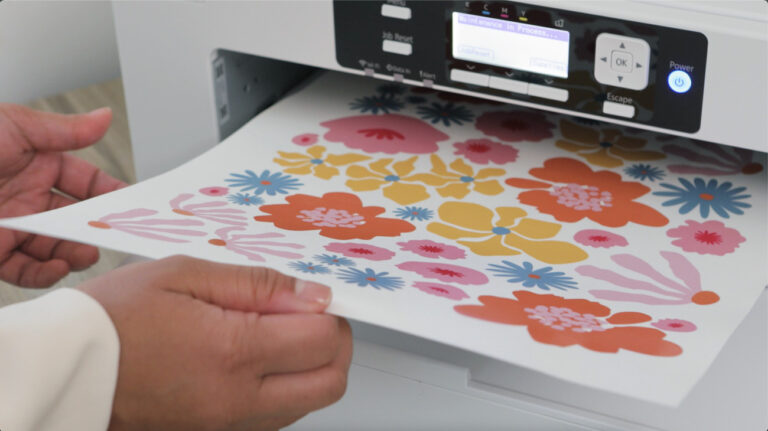
VersiFlex Paper
Cotton apparel
Tees, hoodies, crewnecks, joggers, totes. Light, bright and white garments and natural fibers.

Sublimation Paper
Sublimation blanks
Tumblers, mugs, ceramics, metals, ornaments, coasters. Everything you already run today.
That is the difference between narrowing your catalog and narrowing your business. A shop running two systems has to pick, because every product it adds on the other side of the room is a second setup, a second set of consumables and a second thing to stay sharp on. A shop running one system picks three products and can still cover both halves of a gift order.
Worth being specific, because it matters when you are quoting in October: the apparel side is built for light, bright and white garments. That is most of the everyday cotton on a rack right now, and it is where the team orders, the family sets and the small business merch live.
Where The Other Ideas Go
The cut list is an asset, not a graveyard
Cutting something in September does not mean it was a bad idea. It means it was an idea without a test run, and Q4 is the worst possible time to run a test.
Keep the list. Write down what you cut and why, because the why is the useful part. Blanks were not available. Never pressed it. Margin was thin. Different temperature than everything else. Those notes are your January work, and January is exactly when you want work that can afford to go wrong.
That is the trade. You are not deleting the idea. You are moving it to the month where a failed press costs you a blank instead of a customer.
What This Actually Buys You
Finishing is the strategy
In January, nobody is going to ask how many products you listed. Customers will ask whether you delivered on time, and they will decide next year based on the answer. The shop that shipped everything it promised is worth considerably more in January than the shop with the wider catalog and the apology emails.
Pick three. Make them well. Make a lot of them. Put everything else on the January list, where it belongs.
Have More Questions Before You Purchase?
Work out what each product actually returns per press cycle by using our ROI calculator and let the math assist you to pick your three.