5 Heat Press Settings Tips With
|
|
| |
| | Pressure,
press
type, and
calibration
do more
for your VersiFlex transfers
than
temperature
ever will.
Five tips
for
dialing in
your heat
press,
with quick
videos for
VersiFlex
success.
|
|
|
|
|
| |
|
| 01
| Use A Manual
Heat
Press
| | |
|
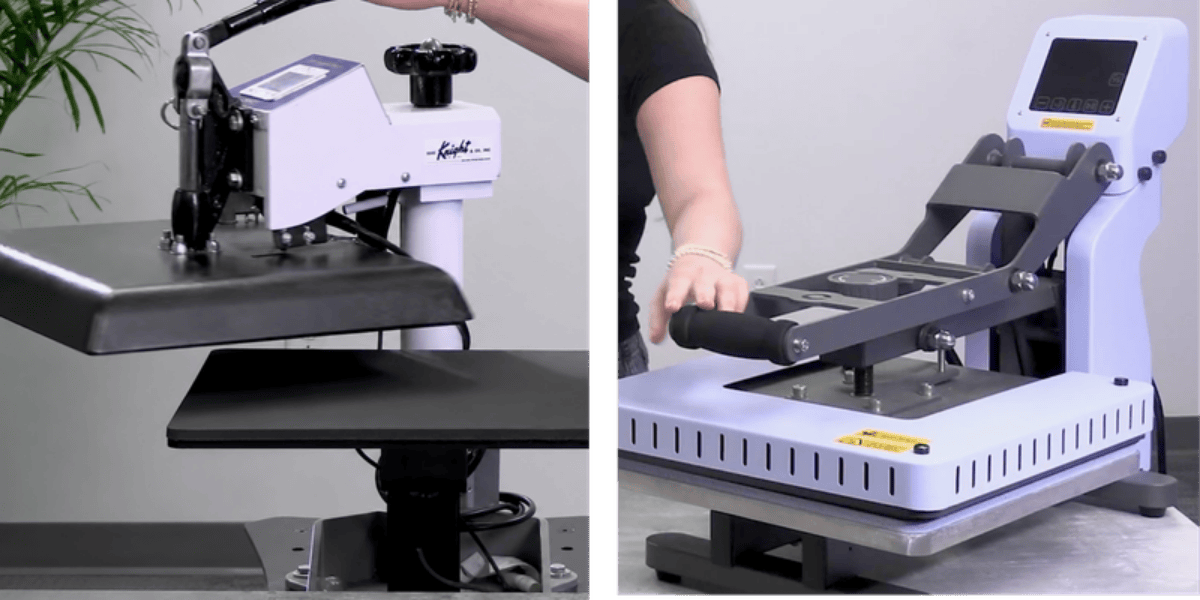
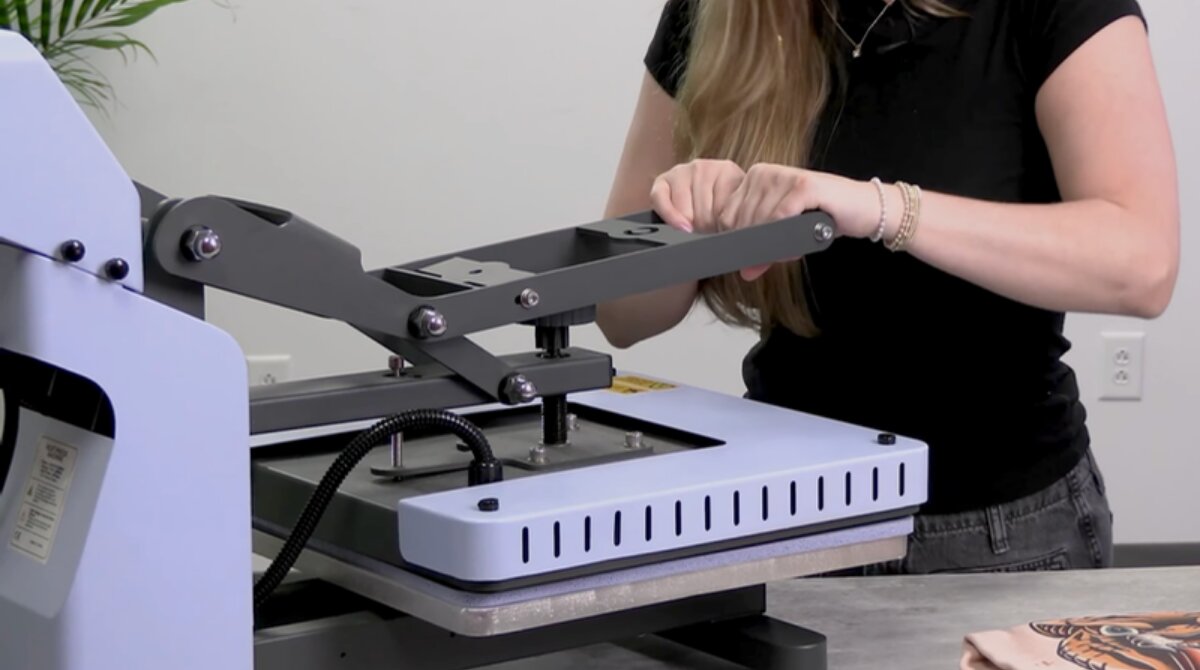
| | Clamshell
or
swing-away,
the shape
does not
matter.
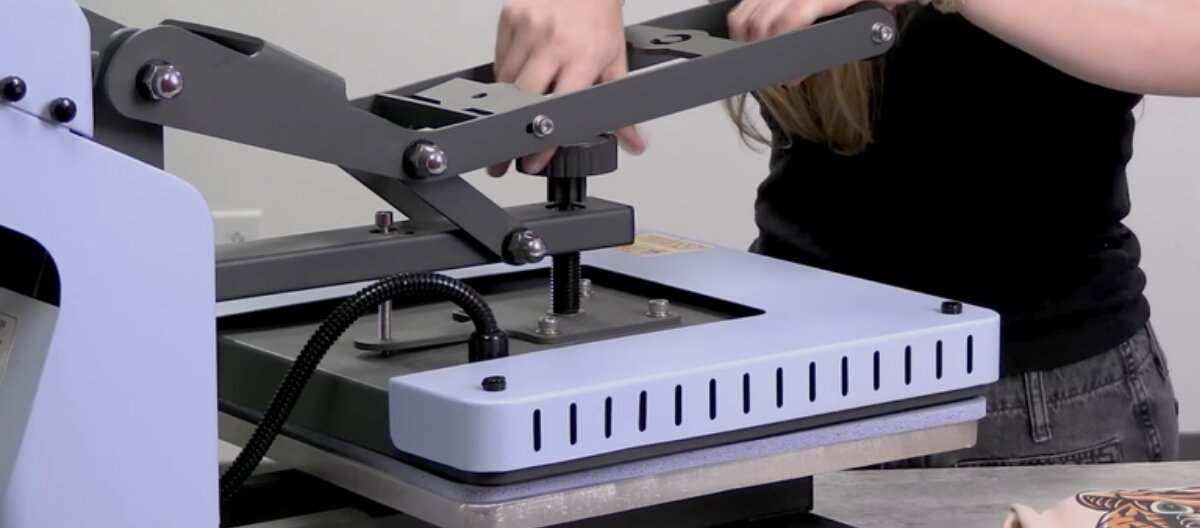
What
matters is
that you
control
the
pressure
by
knob.
“Manual
presses
give the
operator
direct
control
over the
pressure
settings”
– Pauline,
R&D
Chemist at
Sawgrass
|
|
|
|
|
| | Spring-loaded
presses
change
pressure
with garment
thickness,
and
automatic or
pneumatic
presses are
usually
pre-set
outside the
medium-pressure
window
VersiFlex
needs. A
manual press
keeps that
decision on
your
side.
|
|
|
|
|
|
| |
|
| 02
| Dialing In
Medium
Pressure
|
|
| | Too light
and the
transfer
sits on top
of the
cotton
instead of
bonding into
the fibers.
The customer
washes the
shirt once
and the
design
starts
cracking at
the edges.
Too heavy
and the
edges blur,
and you can
sometimes
see the
transfer
outline
pressed into
the fabric.
Medium
pressure,
held steady,
by feel.
Once you
find the
sweet spot
for a given
garment
weight,
write down
the knob
position.
|
|
|
|
|
| | | A cotton
t-shirt
and thick
hoodie
will not
have the
same
pressure
settings.
|
|
|
|
|
|
|
| 03
| Calibrate
Your Heat
Press
Temperature
|
|
| | The
number on
your press
display is
not always
the
temperature
your heat
plate is
actually
putting
out. If
your VersiFlex transfers
are
fading,
scorching,
or coming
out
inconsistent,
the press
itself may
be off. A
simple
thermo
label test
confirms
the real
temperature
against
what the
display
claims.
Run the
check
before you
trust the
settings
chart and
your
transfers
will line
up with
what the
chart
promises.
|
|
|
|
|
| | | Overtime
heat
presses
can drift
or heat
unevenly.
This small
difference
can affect
your
results”
– Pauline,
R&D
Chemist at
Sawgrass
|
|
|
|
|
|
| 04
| Check The
Whole Heat
Press
Plate
|
|
| | The center
of your heat
press is
usually the
hottest part
of a press.
The center
tells you
the
best-case
temperature,
not the
average one.
Your
transfers
don’t all
sit in the
center. They
cover the
whole plate,
and a corner
that runs 20
or 30
degrees
cooler is
going to
ruin
transfers
pressed in
that zone
while the
ones in the
middle come
out perfect.
Checking all
five zones
tells you
what every
transfer is
actually
getting, not
just the
lucky
ones.
|
|
|
|
|
| | | Calibrating
your heat
press
eliminates a whole
category
of
finishing
problems.
|
|
|
|
|
|
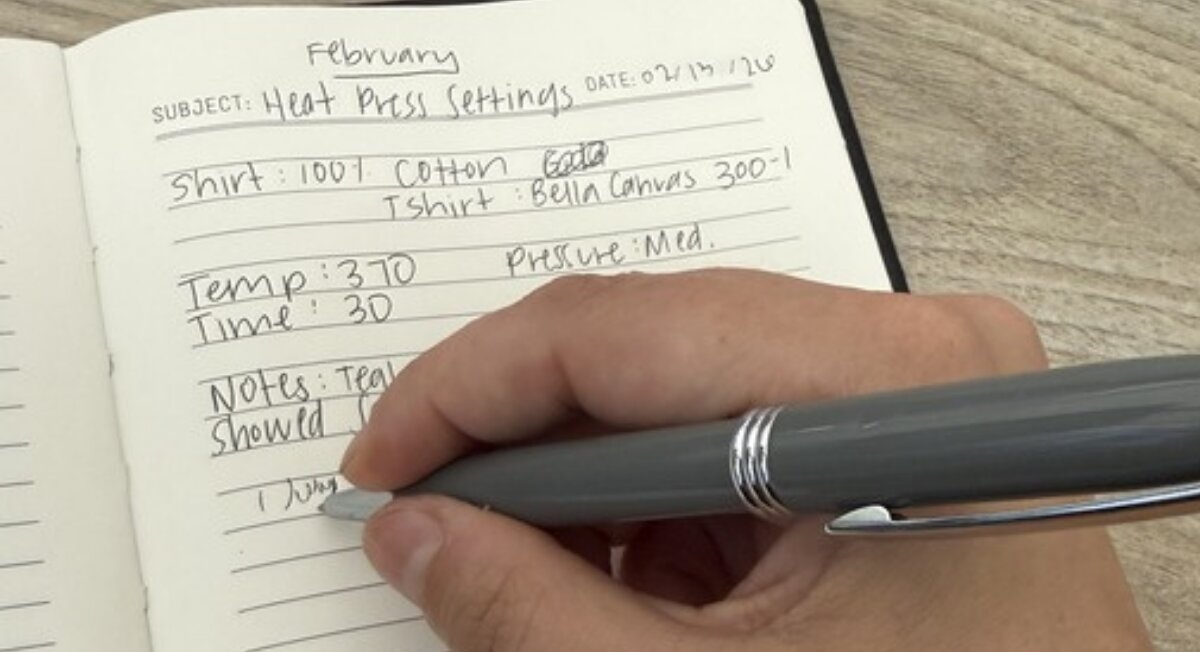
| | Save what
works so you
never have
to re-figure
it out. A
settings log
turns every
successful
press into
reusable
knowledge
instead of a
one-time
win. Every
time you
press a
substrate
and get a
clean
result,
write down
what worked.
Next time
that
substrate
comes
through, you
skip the
test press
and go
straight to
production.
|
|
|
|
|
| | | Keep A
Log With
The
Following
| | | • | Temperature,
time
and
pressure
settings
|
|
|
|
|
|
|
Want to learn more? Check out our YouTube
to become a VersiFlex master today!
|
|